Showing posts with label The Jewish Question. Show all posts

Wednesday, November 28, 2012

The Wars of the Jews, cont.

Garnel wrote a nice comment. I had so much to say it became another post. Whoops.

Garnel writes:
Here's what I see as the fundamental difference between the Orthodox and the non-orthodox.The Orthodox ask: how can I be a good Jew? Let me open up the halacha books and find out.The Heterdox ask: how can I be a good Jew? Well, my values include X, Y, and Z so I'll say that those values are Jewish values and be a good Jew. 
Now obviously this is not about conscious statements but when you hear heterodox people talking about how supporting gay marriage or unrestricted abortion is a Jewish value then you get the impression that heterodox Judaism is defined as "Here are my values, and I'll call them Jewish". And then an adjective in front appears. 
In addition, there's a branding disagreement. For the Orthodox there's a clear definition of Judaism - matan Torah, one God, supremacy of halacha, etc. Now within Orthodoxy there is a battle being wages over a bunch of peripherals, stuff you identify in your post like the rationalists vs the irrationalists (eg. Slifkin controversy) but the basics are what define Judaism. 
So when someone comes along and says "Well I'm a Reform Jew so I practice Judaism even though I don't believe in Matan Torah" we look over and say "Well that's like saying that Sprite you're holding is really a Coke because you want to have Coke but not to actually buy it.
My response:


Thanks for your comment, Garnel. It's nice to be able to discuss topics like this without things getting too heated.

I think that your description of heterodox Jews is true in some cases. However just like there's a range among Orthodoxy, there's a wide range of what makes someone a heterodox Jew (for the purposes of this discussion I'm separating secular Jews from heterodox Jews, whom I define as people that attend a synagogue at least once a year and/or have membership in a synagogue), ranging from minimally engaged 2-times a year Jews all the way up to heterodox rabbis, and I think most intellectually honest people would be hard-pressed to claim that children can spend eight or twelve years in heterodox Jewish day schools and come out of that not knowing anything about Judaism. You may question the prism through which the information or the message is diffused, and you may be correct that the areas emphasized may not be the same as in an Orthodox school, but you have to at least concede that some heterodox Jews have a basic, even fairly detailed, knowledge of Judaism-- though their interpretations of what "Jewish values" are may differ from many Orthodox perspectives. (I realize plenty of heterodox Jews don't send their kids to day schools, but for this discussion I'd like to talk about them a little bit to at least establish that committed/educated Jews exist outside of Orthodoxy.)

Furthermore, I think it's not unreasonable for people to integrate their Jewish values with other values or causes that are important to them, particularly since there are plenty of areas where modern and Jewish values/principles overlap. Tikkun olam gets a bad rap as being overused, but part of being a good Jew is being a good person, and many mitzvot can legitimately be thought of as "good deeds." We may disagree over the specifics of mitzvot ben adam l'makom, but everyone agrees, at least on paper, that mitzvot ben adam l'chaveiro are important. Visiting the sick, giving to charity, not humiliating others, being stewards of the environment, etc... These are all modern values as well as Jewish ones and I don't see why people interpreting their actions as least partially through a Jewish filter is such a bad thing.

Yes, some people may just take their contemporary values and call them Jewish. On the other hand, people who are more educated and thoughtful about Judaism and its values may be better able to articulate where their modern values and some Jewish values differ. My guess is that any day school graduate who's taken even quasi-serious Talmud classes (which are required among most of them) would be able to give you a list of issues they've encountered in their studies that they find problematic. In some cases people may be opting out of some Jewish practices out of apathy or disinterest or assigning other values Jewish status or significance out of ignorance, but the mere fact of choosing does not indicate ignorance. It can just as easily be the result of informed choice, of learning about Jewish values, finding some in conflict with modern values they sincerely believe in (one major one being egalitarianism), and making a thoughtful decision best aligned with their personal conscience. You can personally disagree with that approach, but it's not fair to dismiss it as just being a case of liberal Jews not knowing what they're talking about.

Now, if someone takes a reductive approach to their Judaism and says that Judaism is solely defined by working at soup kitchens, planting trees or marching for Darfur, then I think that's unfortunate and I disagree with that view as being shortsighted and misinformed-- however I think you can make the same error in the other direction by spending all of your time checking for bugs in your lettuce, exercising your OCD, or studying Talmud to the exclusion of everything else, a-la Rav Elyashiv/Yoel Teitelbaum/Rav Scheinberg. That's part of the reason why though I have a different relationship to halacha, I have a lot of respect for the Modern Orthodox world because they really do attempt to strike a serious balance between two worlds, and I think that balance, to one degree or another, is quite important: The stereotype of Orthodox Jews is that they're overly legalistic and insular, while heterodox Jews are all supposedly super granola hippy types who don't know their Hillel from a ham sandwich. The reason these stereotypes exist is because they illustrate some uncomfortable realities, but that doesn't mean that the stereotypes are reality.

In my case, I fully realize that I do not live a fully halachic lifestyle and have no problem saying so-- part of this is because there are parts of halacha I disagree with, and part of it is that I don't accept halacha as being a fully binding system. By that same token, I also have no problem admitting that there are parts of traditional Judaism I don't follow. The issue, as I see it, is that so many people, particularly institutional leaders (but also laypeople) are so personally invested in their branding that no one is willing to admit that there is not a single Judaism, there are multiple ones. It's a spectrum, and not just a horizontal spectrum, but a vertical one, as well:
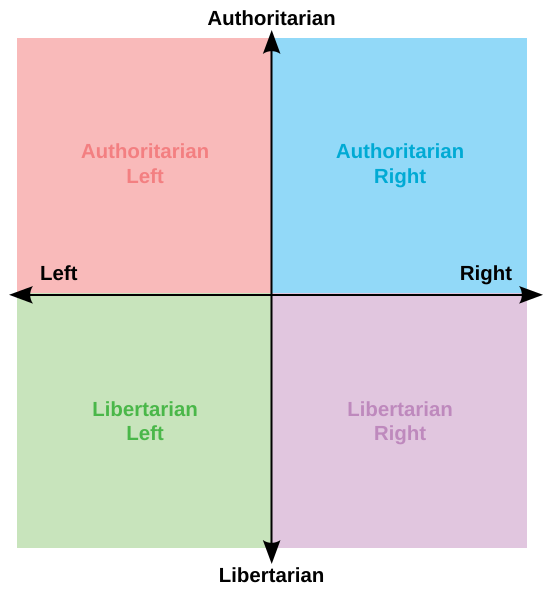
Something like this, for the sake of having a visual model.

Do you focus on ritual mitzvot or ethical mitzvot, or do you try to cover all of them to the best of your ability? My firm belief is that people select their priorities and the rest follows suit. Most people do simply not have enough mental, financial, or temporal resources to apply themselves equally in all aspects of Judaism, and if some folks are going to attack Jews who spend their time engaging in activism but don't put a lot of effort into, say, text study, they should have the honesty to focus their next criticism on textually literate Jews who ignore the principles of justice that those same texts spend so much time talking about.

The point is that everybody chooses. People choose what theology they actually believe in, what stuff they pretend to believe in for appearance's sake, and what stuff they just plain ignore. So honestly, part of the issue with branding is not that Reform Jews are maintaining "I'm practicing Judaism;" it's that Orthodox Jews will never admit that Orthodox Judaism is not synonymous with Judaism (TM). That meta-brand, if you will, is bigger than any one movement, even Orthodoxy. I see "Judaism" as being the collective output and worship of klal israel, and so I have no problem acknowledging my Judaism is not Orthodox Judaism-- I've never claimed anything to the contrary-- but I'd never be willing to say "my Judaism is not real Judaism," which seems to be the subtext of what you're saying when you use the example of a Reform Jew saying "I practice Judaism." The reality is all of us are practicing forms of Judaism. The Judaism you have is different from what Abraham had, from what Moses had, from what the Maccabees had, and in some ways, even from what Rashi or Rambam had. Claiming otherwise because you need to believe in an infallible, perfect chain of Torah is the kind of thinking that leads to people saying Moses wore a streimel or that Ever's tent was actually a yeshiva.

I don't believe we're talking about Coke versus Sprite here (which would be something like comparing Judaism and Hinduism). The better model is Coke and Pepsi. Are they both colas? Well the ingredients vary and there are clear differences (at least according to my soda-drinking friends), but even the most rabid Coke/Pepsi partisans have to agree that yes, they're both the same kind of soda. And while I have no problem admitting I'm a Coke and not a Pepsi, I will get annoyed if I start being told that the only true cola is Pepsi and that it's been that way for time immemorial.

(Hmm, for some reason I'm now craving something fizzy...)

Committing to Engagement

Garnel had a post last week about the Reform and Conservative movements that was framed around the idea that non-Orthodoxy's raison-d'etre is a "lack of commitment." He believes that this, in turn, is precisely the reason why so those movements are losing members. As he put it,
how do you build a strong feeling of commitment to a philosophy based on a lack of one? 
A movement that makes any actual Jewish practice optional can't expect to raise large numbers for a rally. No one is going to pack a stadium with a crowd shouting "We want to do whatever we want and still be considered good Jews!"  Yes, there will always be candidates for their so-called rabbinic programs but how many dedicated pro-feminist and pro-gay people who also have a liking for Bible studies are there out there?  And how can they connect to congregations that see a lack of connection as part of their Jewish identity?
Let's start by putting aside the strawmen of non-Orthodox Jews perpetually searching for the perfect rabbi who will give them permission to do whatever they want while still being declared "good Jews." I don't know anyone who lives that way and if they do, I hope they get some help. While we're at it, we can also shelve the line about liberal congregation members viewing "a key part" of their identity being a "lack of connection."You know, because the whole point of joining a community is so you can keep feeling good and alienated. (Is Garnel confusing unaffiliated and non-Orthodox here? Is he vaguely alluding to the challenges of non-Orthodox kiruv? I can't tell.)

Anyway, this was the part that really tweaked me:
Reform needs Orthodoxy (we supply them with all those OTD's) but the American Jewish community does not need inauthenticity.  It needs an open admission that a lack of interest in proper Judaism is not in itself a genuine form of Judaism and to stand up and create real standards that define them.
First, I agree with Garnel that the primary problems in American Jewish life today are a lack of interest and engagement in Jewish education, culture, identity, and so on. There's no question that the liberal movements are shrinking, though there are plenty of reasons offered as to why.

However, no one is served by simplistic, reductionist and ultimately dishonest depictions of what liberal Judaism-- or liberal Jews-- believes.

Let's start with the movements themselves: from my research and experience, both personal and academic, I strongly disagree that the ethos of non-Orthodox movements is "a lack of interest in proper Judaism". Quite frankly, this gives Orthodoxy more credit and importance in the eyes of the non-Orthodox than it deserves. Liberal rabbis don't go to seminary for six years to spite the Orthodox. I don't wake up on Saturdays and go to shul because I'm thinking, "Yay, I can't wait to go do Judaism WRONG!" The engaged non-Orthodox Jews I know have many affirmative reasons they choose to be Jewish, and choose their particular path in Judaism. In my experience, "I don't want to be Orthodox" isn't often on the list.

The simple matter is, for many American Jews, including those with strong Jewish educations and who are committed to Judaism and Jewish identity, Orthodoxy is not even an option. A skeptical or scientific POV-- which is increasingly common these days-- is largely incompatible with the philosophical and theological demands of Orthodoxy, and if you don't have those as a motivator, it becomes extremely difficult to take on mitzvot that have practical ramifications in your daily life-- to say nothing of the fact that Orthodox belief and practice contain some things that, to modern eyes are, at best, extremely challenging, and at worst, deeply problematic, even offensive. And, as Garnel wrote in his post about YCT, Orthodox culture is increasingly less open to differences of opinion or practice. So given all that, why would anyone who hasn't had some sort of mind-blowing experience where they're suddenly convinced of its existential correctness choose Orthodoxy? The mere suggestion is a total non-starter. And yet many Jews still feel that being Jewish-- in some form-- is important to them. They value it. So they find some middle point. That's the motivation. The binary nature of his post suggests that if a Jew isn't willing to be Orthodox they might as well leave Judaism entirely. I don't see how that helps them, or the Jewish people.

Is there superficiality in liberal communities? Of course. Is there ignorance, apathy and laziness? Yes again. However, the more I read about the various layers within Orthodoxy, the more it becomes apparent that these issues are not limited to liberal Judaism. No community is safe from apathy or disengagement, not even the Haredi communities which do their best to ensure continuity by stigmatizing the outside world and keeping their children as segregated as possible.

Garnel may see non-Orthodox Judaism as illegitimate and clueless, and I don't deny that the movements have their issues, practical as well as existential. However I see the major divide in klal israel not being over a lack of interest, but a lack of a common worldview, both of existence and of Judaism itself. Orthodox Jews view existence through the prism of halacha and Orthodox theology first, and apply this same rubric to their views of what Judaism is. Non-Orthodox Jews, to varying degrees, view existence through other perspectives (modern, post-modern, scientific, materialist) and then try to graph Jewish law and theology onto it as best they can, which necessarily creates a multiplicity of Judaisms as well. If you genuinely believe in a literal Torah mi-Sinai and that the Torah is literally true as well as infallible, then you're probably not going to take issue with halacha, no matter how at odds it might be with your internal reason or personal ethics or preferences, because it came from God. On the other hand, if you don't share those foundational beliefs, then a lot of halacha just doesn't make a whole lot of sense, and so you're naturally going to use your brain and conscience to the best of your ability to figure out how best to live your life in a way that makes sense to you. For some people this approach will incorporate many elements of halacha, for others, less. But that, I am convinced, is the dividing line: is there one objective truth, or not? And if there is, is it Orthodox Judaism's truth? Statistics suggest that most Jews don't think so.

On a personal level, I consider myself very "interested" in Judaism, and continue to work towards becoming a more educated, thoughtful, and committed Jew. I read the parsha, I study Talmud, I go to shul, and I'm still working on my Hebrew. But since I don't share the foundational beliefs of Orthodoxy, and since I find much in Orthodox practice and culture personally objectionable, my practice is not focused around Orthodox standards, and never will be. Not because I'm "not interested" in Judaism, but because I do not see Orthodoxy as the only "proper" manifestation of Judaism-- not least because I don't believe a single proper Judaism exists in the fist place! What some seem unable or unwilling to realize is that for many like me, this viewpoint doesn't stem from an emotional defiance or specific hostility, but sincere belief. You can come up with all sorts of caused for this belief, but it's there, and I refuse to accept a scenario in which my only choices are "belong to a community that you fundamentally disagree with" or "don't be Jewish."

A lot of times in these types of discussions people will use terms like legitimate, authentic, or the increasingly popular "true." I do believe in concepts of authenticity, but in my view Judaism is too large and too varied to have a single authentic expression. There are traditional beliefs and practices in Judaism, certainly, but those have evolved over time and many would be unrecognizable to, say, a Jew living in the first Temple era, much less one of the patriarchs. I don't think anything can be called Judaism, but I do think that a lot of times people give "tradition" more legitimacy than it's necessarily entitled to. The reality is that there are many ways to do ritual, many ways to find God and/or meaning, and yes, even many ways to observe halacha-- remember that this was part of the reason the rabbis got mad at Yosef Karo for writing the Shulchan Aruch and Rambam for putting down the Principles of Faith.

So while I do believe that you can do things "authentically," I also believe that authenticity is only really meaningful in context-- you can have an authentic Orthodox Jew and an authentic Reform Jew, for instance. They may be doing different things but both are being authentic to their traditions, beliefs and understandings, and that doesn't bother me-- because I see both as being part of Judaism. Obviously, if you disagree with that premise, you have a problem. But that's primarily an Orthodox dilemma, because despite the successes of the B'aal Teshuvah movement and Orthodoxy's claim to "true authenticity," when most American Jews leave their liberal temples, they don't head for an Orthodox shul, they stop going to shul altogether.

That said, while most American Jews have no interest in being Orthodox, many are still attached, in various ways, to being Jewish. So what are their options? If some had their way, these people would "self-deport" and never engage with anything Jewish again. Like it or not, it is through the liberal communities that many Jews come into some form of observance that they otherwise would not participate in at all. Some may think that if they aren't frum or doing things to frum standards whatever they do is treyf anyway; I say if Jews are studying Jewish texts, celebrating Jewish holidays, being involved in Jewish worship, etc, it's a win. Again, it comes down to your perspective: is it better to do something rather than nothing? Because realistically, for many American Jews, that's the choice. Not Orthodox or liberal, but liberal or nothing. Frum folks not liking it doesn't make it not true. So the question becomes: if the choice is liberal or nothing, how does choosing the latter benefit klal israel?

Let's go back to commitment: Obviously, a major focus of being an Orthodox Jew is being committed to halacha, and this is an area where many liberal Jews may differ from them. However I don't believe that liberal Jews are committed to a "lack of commitment"; I think they're committed to being Jewish, and, in some form or another, staying Jewish, in spite of having a complicated, even antagonistic, relationship with Jewish tradition. At their core, affiliated liberal Jews believe in staying connected and engaged with Judaism even if they don't take all of it as gospel; indeed for many of them, it is the precise act of giving themselves permission to look at the tradition in a non-literal and non-binding way that is crucial in helping them to stay connected. I realize that may not make sense to some of our Orthodox compatriots, but I think that's the crux of what many liberal Jews believe. They can criticize if they like, but my sense is that's much closer to the truth than "committing to non-commitment."

I agree that there are some big problems in American Judaism today. But I don't think they center around a lack of "authenticity"-- because that implies that most Jews see Orthodoxy as authentic and still choose not to follow it. That's not what I see going on. I think Reform and Conservative and the others need to figure out how to be authentic to their core principles and spread those messages. If people respond to them and the movements grow, so much the better. If not, then hopefully the present generation of alienated Jews will figure out some kind of connection that works for them. Maybe in a generation's time we'll see a non-Orthodox field less dominated by one or two movements and instead a more equal split between the four major ones. On the other hand, maybe what we're seeing right now is another generational/ideological split like we saw 100 years ago during the huge immigrations of Jews to America. Perhaps when all is said and done, it will leave the liberal movements smaller but stronger, with the more apathetic/less engaged members ultimately deciding to cut the chord. I don't know, and honestly, I don't have a particular preference for how things shake out. I have found a path that works for me and my family and since I don't claim to have access to the one true way, I don't feel all that worried about the existence of unaffiliated Jews in the world, or about whether liberal Judaism will survive in the long-term. People will live their lives the best way they see fit, and if liberal Judaism can speak to them and engage them and touch them, so much the better. If not, then not.

The irony, though, is that while some Orthodox like Garnel rightfully chastise liberal Judaism for sometimes being too idealistic, they simultaneously seem to believe in a fantasy in which somehow if  Reform and Conservative suddenly disappeared, it would lead the masses of unaffiliated and uneducated Jews to suddenly choose Orthodoxy and Orthodox standards as the guidepost for "legitimate" Judaism. That's just as utopian as anything the early Reform rabbis said about the demise of Orthodoxy.

The truth is that the Orthodoxy ship has sailed, and most of the Jewish people opted to stay on the dock. The question is where they go next.

Tuesday, September 18, 2012

Authoritativeness versus Accessibility

(Or, Orthodox vs. Open-Source?)

I've been reading an interesting book about major Orthodox publisher Artscroll, whose publications have become ubiquitous throughout the Jewish world. While Artscroll books (which are mostly in English) are quite widespread among the Modern Orthodox community, the author, Jeremy Stolow, has some very interesting statistics indicating their growing "market share" into non-Orthodox populations as well. He even goes so far as to link new Reform and Conservative publications directly to Artscroll's increasing popularity among their congregants:
ArtScroll books are praised as instructive, meaningful, authentic, and even empowering. Its enthusiasts thus claim that an "ArtScroll revolution" has facilitated an unprecedented degree of access to Jewish knowledge and confidence in ritual performance among English-speaking Jews, forming a readership that extends from the erudite to the culturally illiterate and that transcends the traditional markers of institutional affiliation or local custom. At a further remove, ArtScroll has precipitated a reaction among its competitors that one is tempted to describe as an "ArtScrollification" of the Jewish liturgical field as a whole: most notably, with the recent publication of Eitz Chaim (the new Conservative chumash, designed explicitly to "respond" to ArtScroll 's success), and Mishkan Tefillah (the new Reform siddur, which incorporates many design elements, editorial structure, and instructional material found in ArtScroll). 
At first I thought this was just hyperbole, until he cited quotes from those movements' own rabbis admitting that part of the motivation to put out those publications was to counter Artscroll's popularity.
Movement rabbis acknowledge that a main impetus for commissioning the new commentary, titled “Or Hadash” and set to be released April 15, was the growing phenomenon of Conservative worshipers using the popular Orthodox prayer book put out by ArtScroll/Mesorah Publications. The trend certainly irked many Conservative leaders, who concluded that the increasing popularity of ArtScroll was not a function of its ideological bent, but the desire of many Conservative congregants to have a prayer book that offered them more than a flowery translation of the Hebrew text.
...“I’ve been using ArtScroll for about 12 years,” said Steven Rothman, a third-generation Conservative Jew and a member of the ritual committee at Temple Beth Zion-Beth Israel in Philadelphia. “I wanted something with commentary. But the problem with some of their commentary is that it is coming from a strictly Orthodox point of view. I would like to see commentary from a Conservative point of view.” 
Rothman told the Forward that he is excited about the upcoming release of “Or Hadash.” Along with “Etz Hayim,” he said, the prayer book represented a newfound, and long-needed, willingness on the part of Conservative movement leaders to tend to the intellectual and liturgical needs of their followers. “They are finally answering some of the questions about what it means to be a Conservative Jew,” Rothman said. “I’m very pleased that the Conservative movement is opening itself up intellectually to the lay person. That’s not always the way it was before.” 
...“It’s clear that many congregants have been complaining to us for a long time that they have felt a real lack of ability to grab hold of a lot of the prayers,” said Rabbi Jerome Epstein, executive vice president of United Synagogue, the movement’s congregational arm. “Some have felt that the ArtScroll really provided them with information that they needed. But its approach doesn’t represent what we are or what we stand for.”
This, I think, is a key point that many Artscroll triumphalists often overlook. There is no question that some Jews are attracted to Orthodox texts because they see them as an authoritative voice over Conservative or Reform ones. But my impression is that a large number may also simply be reaching out to sources like Artscroll because they are offering information they want and have had a hard time finding elsewhere-- and not necessarily because they're craving an ideological purity that can only be found in Orthodoxy. In the case of Etz Hayim, the willingness to engage with a lay congregant-- to wade into the issues of commentary and interpretation and to lay out exactly what the Conservative approach or approaches are to the text, not only helps inform people about possible interpretations, but also specifically about what the Conservative movement has to say about it.

Still, at the end of the day I think many liberal Jews, particularly those who, like me, were not born into a specific movement and whose denominational affiliations and identities are more fluid, are less interested in establishing or even explicating specific ideological boundaries than in just getting some good nuts and bolts information, which we can then use to draw our own conclusions.  Personally, my lack of Hebrew skills-- but interest in having access to traditional texts- has meant that I've had to invest a fair amount of effort to find resources that reach my needs. Sometimes Artscroll has filled that niche (I used their Schottenstein Talmud quite often in various Jewish studies classes as a source for midrash), and for that it should be commended and given credit. However my gut is that a lot of liberal Jews who use or have used Artscroll or similar texts (including my Conservative shul's Reconstructionist rabbi) are most interested in what Artscroll can do rather than what it specifically says: Artscroll remains a good, solid resource to help bridge the gap between a desire for information about traditional Jewish theology and practice while still needing explicit instruction. However what that tells me is that the real market is not in polemics or apologetics, but good old information: in a nutshell, it's the open-source mindset.

What is open-source? Generally it refers to the philosophy or approach of having open access to technology, often with the ability to copy, modify or transfer it. The "modification" element is challenging when applied to Judaism (there was a book a few years ago that actually used the term  "open source Judaism," which I find a little problematic by its implications). That said, I think what we're seeing here is definitely connected to the effects that open source has had on popular culture. These days many people, particularly young people, approach information as something that should be open and accessible to anyone that wants to see it-- and this in turn leads to a lowering of hierarchy. Even in non-Orthodox Judaism, the communal values are very much clustered around who has the most information and knowledge. This then leads to a huge gap between those who know a lot and those who don't-- and the ones without a lot of education or knowledge therefore get to a point where either they start to lose interest or opt out, or they find ways of gaining access to the information. That's where open source Jewish texts-- not necessarily "open source Judaism" comes in.

As more movements and independent writers start opening the tradition up and making it accessible to less Jewishly literate Jews, I think ultimately we'll find a larger segment of liberal Jews who, if given the opportunity, are interested in taking Judaism more seriously and grappling with it in a more authentic way-- because they won't be operating from an all or nothing, "Orthodox or secular" binary. Having the ability to access Jewish tradition on your terms, whether it be through the siddur, text study, or other forms, is incredibly empowering as well as challenging. Now that you've read the parsha, what do you think about it? Now that you know what your prayers mean, what do you intend to do with that knowledge? What does a liberal Judaism informed by regular or semi-regular Talmud study look like? When liberal Jews are confronted with the knowledge of what their tradition says, they by necessity are required to start becoming more engaged and more authentic-- not more Orthodox, but more informed. "I don't know" is no longer an excuse.

With the advent of accessible-- but hopefully still authentic-- Jewish texts, we in liberal communities now get to start having some of these conversations. And funnily enough, in a real way a lot of this is thanks to Artscroll- for inspiring or attracting its readers, for irking its competitors, and for inspiring more of us to wrestle with our tradition-- but on our terms and its, not theirs.

Tuesday, July 17, 2012

Defining Jewishness (mine and others)

Ongoing blog friend Antigonos continues to put up with my ramblings and even wrote me a nice long note. Here it is:
Rabbi Eugene Lipman, z"l, once said to me that there is only one defining criterion in Judaism: does one believe that there was a Divine Revelation on Mt. Sinai, or that the Torah was written, not by God, but by man [divinely inspired, maybe, but then, maybe not]. 
The former are Orthodox, and the rest are...well, the rest.  This is about the basic underpinning of a religious world-view, and not specifically about level of observance.  American Jews tend to get obsessed with bservance to the exclusion of philosophy.  Judaism becomes defined, on a sliding scale from 1 to 10, by how one "Jews it up" [a favorite phrase of Rabbi Alan Miller's].  Pesach is marked by a box of matzah on the table but otherwise living as usual = Reform; going berserk with spring cleaning, selling hametz, using special cutlery, plates, pots and pans = Orthodox, and doing the same as the Orthodox but not eating gebrochts as well = ultra-Orthodox. [You'll notice I'm leaving out the Conservative, for a reason]  Shabbat is a day to be a couch potato; Passover becomes a festival of "Freedom" [so blacks like the President can celebrate it too] and isn't a celebration of a particular event in the history of a particular people. 
That's a false interpretation, alas.  The basic divide concerns the place of halacha in Jewish life.  If [actually, "iiiiffff" in a Talmudic singsong ] one believes that Torah is a human product, then humans can change it, or dispense with halacha altogether, and that, to a large extent, is what the Reform have done [there's something of a backlash nowadays since Reconstructionism probably has its largest impact on current Reform thinking].  If one believes that God has directed you, through Torah [d'oraita] and the Oral Law [d'rabbanan] how to live, and to live this way is a manner of turning one's life into a form of perpetual worship, then one can't rewrite halacha to suit one's desires.  This is the view of the Orthodox.  The Conservative have never really developed a coherent philosophy on the authority and justification of halacha, and each congregation seems to be as "traditional" as they want to be.  As a result, currently the Conservative Movement is having a lot of trouble.  The Orthodox know who they are, and the Reform more or less incorporate anything they want to include, and the Conservative...well, they're there somewhere. Sort of.  I guess.

Just for a taste of where we are... I don't believe the Torah was written by God. I just don't. I don't know exactly what various people have meant by "divinely inspired," but at this point in my life, it's appropriately vague enough that I can get behind it. I guess. The short answer, I suppose, is that while I'm not sure I always believe in God, I do believe in the Jewish people, and that framework, at least these days, makes sense to me. I see halacha and Jewish traditions as important, though not necessarily binding-- or at least, not binding in a static way. This makes sense to me, given that Jewish life historically was not static. That's not to say I believe that halacha can mean "whatever I want it to mean;" on the contrary, I feel that since I am still not entirely sure where I stand on the issue of halacha being personally binding, I have less personal motivation to skew halacha one way or the other. Still, my sense is that there's more inherent flexibility to the system (as demonstrated by various thinkers and practices in Jewish history) than many contemporary Orthodox Jews (particularly on the Haredi side) give it credit.

To touch on your Passover example: our Passover consists of cleaning, selling hametz, and going 8 days on matzah and potatoes. We have a seder firmly grounded in Jewish tradition, at which invariably most of the guests aren't Jewish. We clearly aren't Orthodox. But we aren't just doing lip service either. We're somewhere in between, a distinction I will claim proudly.
This can have massive implications.  Probably the biggest one is the problem of patrilineal descent, which  imply is not accepted by any but the Reform, and has made it very difficult for ANY American Jew to get married in Israel [and I have known of some tragic situations in the US, btw, although American Orthodox rabbis are more lenient in converting the non-Jewish spouse who mistakenly thinks she -- it is usually a she, obviously -- is Jewish but really isn't.  And that's because of the children] 
So I don't think that a division between "Orthodox" and "in-married non-Orthodox" is really valid.  Reform, which I think absorbs most of the mixed marriages, isn't a "diluted" form of Judaism even though many American Jews think it is.  Further, it matters which partner is Jewish, and which is not.   American non-Orthodox Judaism is rapidly becoming a separate religion -- rather as Unitarianism is only marginally Christian compared to the Catholic Church [and I suspect many Catholics wouldn't consider it Christian at all]  Since most Israelis regard the "shul I rarely if ever attend is Orthodox", both what is called here "Progressive" [Reform] and "traditional"[Conservative] movements have expressed wonder that more Israelis don't join non-Orthodox congregations.  It really isn't odd -- Israelis may be observant or may not, but non-Orthodox forms of observance just don't seem really "Jewish".
I've definitely heard that, and I support Israelis' (and all Diaspora Jews') right to affiliate and support whichever individual congregations or movements they choose. My one quibble is that up until extremely recently, the deck has been significantly stacked against the liberal movements by virtue of the Orthodox monopoly over state functions, as well as the government providing the Orthodox funding while denying it to other movements. If the liberal movements can't seriously compete in Israel, so be it. But I don't think it's quite fair to write them off given the massive advantages the Orthodox have enjoyed thanks to the state. On an emotional/intuitive level, I think I somewhat understand the desire to have an authentic knowledge base or service aesthetic available when you want to access it (this is partially what's been percolating in me since my early college days), but it is interesting that there's such a disconnect between typical secular Israeli identity and continuing loyalty to Orthodoxy when it comes time to have a wedding or go to a holiday service. I wonder if a big part of that isn't the fact that Reform and Masorti are viewed as being foreign/imported traditions and as watered-down or somehow inauthentic versions of the real thing.
I would take issue with you when you write that "many" [I would amend that to "some"; I don't think the numbers reflect the reality of what happens to mixed marriages -- which is usually no religious affiliation at all] Reform mixed couples are raising Jewish children.  They are raising Reform children, which usually means little knowledge and less observance, not to mention the halachic problem in the case of non-Jewish mothers.  And I know Conservative rabbis who will not accept children from mixed marriages in Hebrew school according to patrilineal descent.  Like certain parts of the Episcopal Church, the whole business of homosexual and female rabbis, and gay marriage, is driving some Conservative to being modern Orthodox. [Recent studies show, btw, that in NY at least, the most rapidly growing community is the Orthodox, while both Reform and Conservative are dwindling, through indifference, not increased religious awareness]
You're quite right that I shouldn't extrapolate outwards based merely on my own experiences; however, living in a very liberal city and hopping around within the various liberal communities in that city, my observations have been that within the quasi-observant liberal community there seem to be a fair number of intermarriages. This is certainly not to claim that most intermarriages necessarily lead to Jewish children, just that it does happen, and I feel that's a worthwhile counterpoint to be aware of given that many people continue to believe the old line that as soon as a Jewish man marries out, that family and any children are by definition "gone." I'm not questioning the statistical data, just saying that the opposite is also part of the whole picture.

Yes, the Orthodox are growing. Part of this is due to organizational incompetence among the liberal movements, a general allergy to religiosity among people my age and younger, and, of course, the fact that on average Orthodox folks tend to have at least two to four more children than their liberal counterparts. I'm not begrudging the Orthodox their numbers, just saying that I'm not sure that necessarily demonstrates that more people are specifically becoming convinced of Orthodox theology or arguments.
An Israeli perspective on your survey questions might interest you.  In chu"l, you have to actively do something "Jewish" to maintain a Jewish identity [unless you are unfortunate enough to have an ID with "Zhid" stamped on it]; here you don't.  You just ARE.  Big difference! 
Seder participation is very high in Israel among secular Jews -- roughly 80% according to some articles I've read.  Pesach is one of the best-observed holidays in Israel, with otherwise secular folks going mad with cleaning. 
Ditto Hanukah candles.  I'm a little surprised by the question.  Hanukah is such an unimportant holiday, really [yes, I know it's a Jewish Christmas in the US]  Here in Israel just about everyone with kids lights candles [kids make hanukiot in school, so most families light one for each member, and put them, as required by halacha, in the window or in boxes outside the house], but there is very little gift-giving.  The kids only get a single day off school. 
As to charity ["Jewish" goes without saying], I think most Israelis do give some charity, although to an organization like Yad Sarah, which supplies medical equipment as a free loan, or to the Israeli Red Cross --  Magen David Adom -- instead of a religious charity is more common among the seculars. Donating charity as a form of giving a present for a special occasion is quite common too. 
Very, very few Israelis [unless they have medical problems, as I do -- I'm diabetic --] eat on Yom Kippur.  A lot of secular folks, however, will go to sleep after the seudah mafseket and try to stay asleep until Ne'ilah to avoid having to go to shul.  However, synagogue attendance is very high -- there's that wonderful story about how the Arabs goofed by attacking Israel on Yom Kippur.  Mobilization was very easy; men went from shul to shul and everyone was notified immediately.  If the Arabs had attacked on Sukkot, when a lot of Israelis either travel or have barbeques in the woods, mobilization would have been very difficult.  The other halachot of the fast are observed, too: no leather shoes [Crocs!], wearing a kitel or white clothes, etc., by a lot of not particularly religious* men. 
Is being Jewish important?  I think most Israelis would find that question confusing.  We would phrase it "being observant"; we're all Jewish. 
Jewish events?  Are you crazy?  The _country's_ Jewish!  I'll skip over the "are you attached to Israel" question. 
Do you talk about Jewish-related topics?  What else?  Two Israelis, three political parties.
Ipso facto, every Israeli is part of a Jewish society.  In fact, one of Israel's main problems is that the country is filled with Jews  Men wearing kippot, the crocheted variety, are everywhere, and not all of them are strictly Orthodox.  My youngest daughter's father-in-law does this, and he is "traditional". 
Shabbat meals?  I wouldn't guess a percentage, but families do get together much more here than in the States.  For one thing, the distances are smaller, which makes it easier.  A substantial percentage of Israeli "traditional" types make Kiddush, eat a Shabbat meal, sing zemirot, even bench -- and then watch TV or go to a soccer match on Saturday.  Most married women light candles on Friday night; less non-Orthdox families make Havdalah.  Some traditional Israelis won't travel on Shabbat, others will. Living in Jerusalem, where's there's no public transport means the city shuts down more on Shabbat than Tel Aviv, where everything is open. 
Synagogue membership is rather different here than in chu"l.  It's much less formal.  The davvening is also much less of a performance.  Shacharit on Shabbat is two hours, barely, from start to finish: no choir, no sermon [indeed, no rabbi].   There are little "shteibelach" on nearly every block [every ethnic group has its own, and sometimes even every family or clan within an ethnic group does].  You can drop in.  Shopping malls have synagogues and the loudspeaker will announce if they need a minyan for mincha or something.  There are even commuter trains which have a daily minyan for shacharit in one carriage.  A lot of otherwise only mildly observant men lay tefillin in the morning, which is rather surprising when you think about it, as these are the sort who only go to shul on major holidays or even only on Yom Kippur.
With easy access to kosher restaurants and kosher food generally in supermarkets, a much higher percentage of non-Orthodox Israelis keep kosher homes "because my mother did".  Young Israelis are more likely to eat non-kosher until they marry, then they keep kosher "for the kids".  [The army, of course, keeps kosher kitchens since seculars can eat kosher but religious soldiers obviously can't eat non-kosher]
Opportunities for study are all over the place; there are even radio shiurim on certain channels.  The average Israeli is, although no scholar in Judaic studies, far more knowledgeable than an American Jew -- after all, he can easily read primary source material in the original language, and living in the Land [Israelis are nuts about archeology and historical references], it all seems much more pertinent.  But the younger secular generation is becoming less interested -- partly because of the polarization between the haredim and the non-religious.
Very interesting take on the survey questions! I definitely like the fact that in Israel the "traditional" and even "liberal" streams seem to be based more on preference, ideology and tradition than a lack of knowledge about what they're doing, which I feel like, at least among the laity these days, more often tends to be the case among liberal streams in the US. I think more than anything, what I'm working towards is an ability to put the Reform/Reconstructionist philosophy of "personal choice" and "community folkways" into real practice by being informed enough about what normative/historical halachic perspectives have been to then make my own determinations about what I think is right or relevant. Where I think Conservative Judaism may have the edge on Orthodox Judaism in this regard is that CJ seems to be more tolerant of dissenting views (in terms of personal practice) than OJ, where communal pressures and conformity, particularly regarding public religiosity and strictness, seem to be ever-increasing. I like the idea of being part of a community that respects people wherever they happen to be, while also taking Jewish tradition seriously and being willing to draw some lines about where tradition does and doesn't go (which is not to say that I reject contemporary liberal values-- just that I value a community that has the intellectual honesty to admit that the conflict exists).

Thursday, July 12, 2012

Defining the Present and Future of Non-Orthodoxy

For quite a while, lots of people have been assuming that as the Conservative movement moves left and the Reform movement moves right, eventually there will be some sort of merger between the movements, if not officially, then in practice. So it's interesting to read comments like sociologist Steven M. Cohen's, where he very explicitly draws a line between non-Orthodox Jews.


rather than divide the world into two ‎‎(either Orthodox/non-Orthodox OR in-married/intermarried), I prefer to ‎divide the world into three (Orthodox, in-married or unmixed ancestry non-‎Orthodox, intermarried and mixed ancestry). The differences across these ‎boundaries are real, even as the groups do bleed into each other.‎ 
For example, how wide, in fact, is the difference between the Modern Orthodox ‎parent of a Ramaz Yeshiva student, and the Sabbath-observant parent of a ‎Schechter day school student? Or, for that matter, who is likely to be more ‎engaged in Jewish life: the non-married Reform-identifying young adult or ‎his/her intermarried parents who belong to a thriving Reform temple? In short, ‎the divides I (and you) are suggesting do make sense, but they need to be ‎qualified with a consciousness of their imprecision and fluidity.‎ 
In fact, each of the three camps I’m suggesting itself may be divided in two. ‎Among the Orthodox, we found incredibly large differences between the ‎Modern Orthodox and the Haredim, especially with respect to participating in ‎the larger Jewish community. Among the in-married non-Orthodox, we found ‎substantial differences between Conservative and Reform Jews, especially if ‎affiliated, countering the widely held notion that the two venerable ‎denominations are no longer meaningful. And among the intermarried ‎population (be it by ancestry or current circumstance), Jews divide ‎significantly between those who see Judaism as their religion and those who do ‎not.‎


The one area where I think Cohen may be overstating his case is that at this point, "intermarriage" can mean a lot of things. In the Reform movement, lots of intermarried couples are raising Jewish children within Jewish institutions. Even among the Conservative movement, you have people that intermarry and then later convert. So I'm not convinced that it makes sense to frame the in-married and the intermarried as two entirely distinct groups, or to place the biggest "dividing line" between Jews who marry Jews and Jews who don't (though I should note that in the study the authors comment that they treat marriages where one partner was not born to Jewish parents but consider themselves Jewish--whether formally converted or not-- to be in-marriages). Rather, it seems that the greater divide among non-Orthodox Jews is between Jews who are involved and connected, and Jews who aren't. Connection can come in a lot of ways-- institutional involvement, community involvement, organizational activity, artistic activity, education, even reading! But at its core, the issue of involvement or connection comes down to whether people identify as Jewish intellectually and emotionally and then do something to put that into practice. These people can be contrasted with those that, for whatever reason, don't have or feel that connection. A lot of times these categories are re-cast as affiliated and unaffiliated, but I think affiliation tends to carry too much denominational baggage. If someone isn't a member of a shul but does other Jewish stuff (religious or otherwise), do they count as affiliated? Considering that a huge percentage of American Jews do not belong to a synagogue, this suggests that the term "affiliated" is no longer that useful to measure Jewish involvement, commitment or enthusiasm. (Cohen's study examines issues of "affiliation" as well as "engagement".)

At first blush, I'm also somewhat skeptical of Cohen's comment about "substantial differences" between Conservative and Reform Jews. Glancing through the chapter on engagement, it I think the general gist seems to be that on average Conservative Jews tend to attend services more, keep more Jewish traditions, and may follow or be engaged in more Jewish issues or concerns. Those are certainly fair differences to note, but I'm unconvinced how defining they will continue to be as this generation ages and their children grow into adulthood. To varying degrees, a lot of these differences are cultural and familial by-products, and that means that they can and likely will continue to shift. Also, looking over some of the questions asked in the study, it seems to me that some of the areas they're looking at are either somewhat biased or minor in terms of importance/significance. For instance, asking whether someone's closest friends are Jewish or whether they fast all day on Yom Kippur. To me, these feel very generationally or religiously-tied, and while I won't deny that there can be a correlation between them as data points and painting a larger picture of someone's Jewish engagement, I would strongly disagree with the opposite conclusion, that if someone doesn't do these things they're necessarily not Jewishly engaged. Statistics are important, but only if you're asking the right questions. The other thing that I would note, living in a very liberal area with plenty of liberal congregations, is that sometimes people who come from a more liberal background (say, Reform) are more comfortable seeking out and experimenting with different forms of observance, including more traditional ones, than people who are more ideologically fixed. So if a Reform shul decides that it wants to practice having a Carlebach-style Friday night minyan, it may actually gain more traction among its members who are used to trying different things than a Conservative shul that's more stuck in its ways.

I feel like these kinds of studies struggle with staying relevant; as younger generations continue to experiment with and explore various ways and contexts of being Jewish, older identity issues such as "having close Jewish friends" or even "feel very attached to Israel" cease to be a very good indicator of much.

Just as a test, here are the questions from part of their engagement survey, specifically looking at the non-Orthodox. My answers are compared to other non-Orthodox folks in my age range (18-34) not living with their parents (thank god):

  • Do you usually or always have a seder in your house? YES (58%)


  • Do you usually or always light Hanukkah candles in your house? YES (55%)
  • Are your friends mostly Jewish? NO (I can count my close friends on two hands and my Jewish ones on one.) (30%)

  • Do you give to Jewish charities other than the Jewish Federation? NO, I don't even give to them. Actually I don't even know how to get in touch with them. (28%)

  • Do you fast all day on Yom Kippur? YES (though the two years before the most recent one I was sick and didn't) (52%)

  • Is being Jewish "very important" in your life? YES (38%)

  • Have you been to a Jewish Museum or Jewish Cultural Event in the past year? YES... Young Guard Havdalah  counts, right? (44%)

  • Do you feel "Very Attached" to Israel? Um... (25%)

  • Do you talk regularly about Jewish-related topics with friends? And my parents, and my wife, and my wife's parents... (28%)

  • Is it very important to be part of a Jewish Community? I suppose so, then again I only joined a synagogue a month ago (I actually still need to send them their check) (21%)

  • Do you regularly participate in Shabbat meals? SOMETIMES (curse Mrs. Yid's lucrative job!) (33%)

  • Do you give to the Jewish Federation? NO (8%)

  • Are you a member of a synagogue? YES (sort of, almost) (29%)

  • Has anyone in your house been to a JCC program in the past year? NO (Too far away) (31%)

  • Do you feel part of a Jewish community "a lot"? Which community? My shul? The city community? Sort of, I guess? (17%)

  • Do you regularly access Jewish websites? I'm here, aren't I? (34%)

  • Have you engaged in Adult Jewish Programs in the past year? YES-- go Tanakh class! (28%)

  • Do you study informally, either alone, with a friend, or a teacher? YES-- Parsha study for the win! (35%)

  • Do you usually or always light Shabbat candles? YES-- Havdalah candles are sometimes trickier to get to. (17%)

  • Have you volunteered for a Jewish Organization in the past year? NO (24%)

  • Do you have a kosher home? NO-- but the kavannah is pure! (19%)

  • Do you regularly participate or belong to a Jewish organization? Does the Jewish webring count? No? Then how about shul membership... once that check goes through...? (19%)

  • Do you attend services more than monthly? YES-- sometimes twice a month! (Seriously, we're working on it.) (8%)


  • Do you belong to an online Jewish Group? YES-- and I call it the Judeosphere! (32%)

It's interesting that many of my answers tended to match the study's findings among my age group (it's not surprising that those numbers are significantly lower in many areas than the same demographic that lives with its parents, as those responses are probably skewed from parental involvement): more ambivalence on Israel, less ritual observance, and just generally less interaction with formal community structures, be they financial, organizational, or activist. On the other hand, the top affirmative responses show that holiday rituals, Jewish cultural activities, text study, online communities and self-identification are meaningful focal areas. The good news from this is that it suggests that there's still interest and identification with Jewishness as well as elements of Judaism, but the trick is for the organizations, synagogues and other institutions to find ways to tap into that interest and keep themselves relevant, because clearly plenty of young Jews are perfectly happy creating their own organic and eclectic communities rather than specifically looking for Jewish identity and fulfillment within the traditional contexts of the synagogue or the JCC.

Honestly, I would love to see a study done that focused more on intermarried, unaffiliated and especially younger Jews. Preferably, they'd even get young sociologists to plan and conduct it.

Any volunteers?