Day 12- Last Day in Poland.
Our last day in Krakow was also going to be our last day in Poland so we wanted to make the most of it. We got up early and left before 10. We took a taxi to get to Old Town and saw the ancient clock tower, the last surviving remnant of the original Town Hall built in the 1200s. It was huge!
We went inside Sukiennice ("Cloth Hall"), a large ornate rectangular building. Inside was a giant market with around 80-100 booths. Merchants were selling leather goods, wooden carvings, dolls, boxes, glasswork, Polish clothes, and various tourist items. One booth had replicas of medieval Polish weapons and miniature wooden carved heads of famous Poles that could be hung on a wall. (One of them was clearly modeled on Pilsudski; I made a crack about mounting heads of state on your wall but as Abbot Yid knows nothing about Polish history, my brilliant wit was wasted on him.)
There were also, of course, lots of places to buy jewelry, especially amber. Mama Yid was in Heaven. Abbot Yid and I, not so much. Mama Yid insisted on seeing every booth and was incapable of "scanning," even when the booths were selling things she didn't want. We spent about four hours there, which was about three and a half hours more than Abbot Yid and I needed.
As a way of killing some time, I decided to walk around with my camcorder and film the place. One of the things I noticed, over and over, were the Jewdolls. For a town with not a lot of Jews left there sure were a lot of different kinds of Jew-dolls.
After finally finishing in Sukiennice, we ate lunch by a statue in the square. On the bench next to us a teenage girl sitting with her family decided she was tired of her sandwich and started scattering it to the birds, attracting a large flock of pigeons. Oblivious to our death-glares, she continued feeding them for about fifteen minutes, even laughing and encouraging her sister to take a picture when a few of them hopped into her hand. I wasn't sure if I was looking at a cultural phenomenon or just a moron who didn't know anything about disease transmission: were Polish pigeons not considered rats with wings?
During lunch I discovered my watch had stopped. We left the square, dragging Mama Yid away from the outer ring of shops around Sukiennice (though I did pop into one place to get a pair of pewter shot-glasses for Deacon Yid and me). We walked south through Old Town, marveling at the incredible buildings. Everywhere you looked there were old churches, houses, flats. Interspersed with them were the ugly modern structures (and of course lots of garish signs advertising shops, restaurants, money-changers and the always entertaining ALKOHOLE stores).
Next we headed to Wawel castle. Though I was sad we didn't have time to go inside, my parents were very good sports and consented to a quick walk around the outside wall. Outside I found a model replica of the castle. I wasn't a fan of the silly snow globe with a cartoony dragon inside it that came attached to it, but decided that I'd rather have something to remember the castle than not.
We went back to the flat for a rest and to start packing before taking a break for dinner. At this point my watch started up again, which was a real relief. (It also gave me a wonderful opportunity to tease Mama Yid that shopping with her actually made time stand stil.)
For our last night in Krakow we decided to go back to Kazimierz one more time. On the way we stopped at the Tourist Center to get a few more Jewdolls, angry American ladies be damned. Mama Yid bought for so she could have some fun table settings for Hanukkah. I got a couple as gifts for friends. I thought they were cute but was also disappointed that the sculptors' imaginations were so limited. If you had never met a Jew and all you had to go on was information gleaned from these dolls, you'd think all Jews did was count money, play klezmer or carry giant menorahs and the occasional book around. Since the only available dolls were men (we looked high and low for a lady Jewdoll for Mrs. Yid), one would be forgiven for assuming that Jews produced asexually, too. Or maybe Jews were like Tolkein's dwarves and men and women couldn't be told apart.
We ate dinner at an outdoor restaurant in the small square behind the bookshop and between three of the Kazimierz synagogues. I had cholent again, beef this time, and it was very good, though I think I still preferred the chicken one from the first night. Over dinner and an Israeli wine from the Golan Heights, my parents and I had a very nice conversation.
"I'm glad I came," said Abbot Yid.
"That's high praise coming from you," I said.
"I think my father would have enjoyed this. I think he would have been happy we came here."
This made me think about Mama Yid's father, who had been twenty years older than any of my other grandparents and died when she was only seven years old.
"If you could tell your father anything, what could you say?"
"I'd want to tell him that my sister and I turned out all right, that we both got advanced degrees and that we were successful."
"And is there anything you wish you could ask him?"
"I think just, 'Who were you?' I was so young when he died..."
I nodded. "It's crazy to think that he was born over 100 years ago. How different things are, all the things we have that he didn't. It's interesting to wonder what he would have thought about the world today."
I turned to Abbot Yid. "Is there anything you wish you could ask Zayde?"
He waved the question off. "I would have liked you to have a chance to spend more time with him. You could have asked him all the good questions."
It was a sad but happy moment at the same time.
I was sad to be leaving Poland but very glad we had come. In a way, I would have preferred to go home right then and had time to process everything that had happened. At the same time, how often did we go to Europe? We had been in touch with Mama Yid's British cousins for years and it was important that we finally have a chance to meet in person. I was also hoping London would be a little less intense and stressful than Poland had been. Maybe we could actually have a little bit more of a vacation there and it would give us some time to think and recover post-Poland.
Showing posts with label Travel. Show all posts
Showing posts with label Travel. Show all posts
Thursday, August 18, 2011


Wednesday, August 17, 2011
(Trying to) Honor the Past
Day 11- Auschwitz & Birkenau
The day started off appropriately enough by raining throughout the morning. Since the previous day I'd had such good navigation luck, I decided to chart us a route through the town surface roads again as opposed to the highway. What I hadn't considered was that though both roads were the same distance, cars can drive about twice as fast on the highway. We finally got into Oswiecim around noon.
Polish signage is generally pretty bad as a rule, but something about the lack of signs for the camp seemed particularly strange. I understood why the town may have preferred visitors to come and visit things besides just the camp (there is a synagogue and Jewish museum, for instance, as well as some other interesting historical sights), but who were they kidding? The camp gets 1 million visitors a year. I'm sorry if you'd rather be known for your antiques or the awesomely-named Mieszko Tanglefoot, but let's face some reality, please.
When we finally did find the museum, it was jarring at how sudden the transition was (though we had been fairly creeped out at seeing stone highway barriers with an all-too-familiar curve on the top, complete with barbed wire attached). It wasn't like the town ended and then the camp was off to the left, standing dramatically by itself. The busy road took you right past the camp and if you weren't looking for the wooden guard towers peeking over the walls, you could actually miss it.
The parking lots were absolutely packed, despite it being a Monday and raining. There was a large row of strip-mall-like stres on the outer edge. The visitor enter was in a small mall. There weren't any brochures in English (really, Auschwitz museum? really?) but my parents were hungry so we stopped for a snack at the only restaurant in the building, a bizarre hodge-podge of Polish buffet and half-hearted attempts at American and Italian-American food: Abbot Yid got french fries and Mama Yid got a crepe bolognese. We sat across from a carved wooden pizza chef. On the wall there was a sign informing us that "It is forbidden to bring and consume your own food and drinks." There was something about seeing orders posted on a wall that was a little off-putting here, even over something as banal as outside food. The radio alternated between Polish and American pop music. While my parents were eating I identified two songs: one by the reggae group that was famous for writing "Bad Boys," and that Katy Perry song about having romantic liaisons with an alien.
I wasn't sure what I had been expecting at Auschwitz, but this wasn't it. Instead of experiencing Arendt's banality of evil, so far this was the evil of banality.
We wound up spending almost five hours at Auschwitz and Birkenau altogether. Once we got into the museum proper things started getting surreal. The entrance hall and the busses were absolutely packed with giant, crushing crowds-- to the point of bringing up uncomfortable mental parallels. (We weren't the only ones commenting on this; we heard multiple groups of people discussing the "irony" of packing us in like sardines. One guy wondered if this was intentionally designed as "part of the experience.")
It was hard to connect the physical site of Auschwitz with the cultural image I had approached it with. Auschwitz has been built up in the Western imagination as the archetype of evil, but how can anything live up to that? Compared with its image, Auschwitz seemed not foreign, not evil, enough. Here was a prime example of the banality of evil. On first blush, the place did not read as specifically terrible. It had grass, flowers and birds flying overhead. The bad weather and pervasive gray skies certainly added to the moroseness but it didn't feel different from any other spot.
Areas that did have an emotional impact were ones that emphasized the massive scale of the extermination and destruction that happened there: the piles of hair, glasses, and shoes. A room full of suitcases, covered with carefully printed names and addresses of unsuspecting victims long dead. Standing at one end of Birkenau and not being able to see the other side because of how massive the camp was. These were the things that showed the planning side, the inhuman coldness that allowed people to separate out their immediate tasks from the reality that they were building factories of death.
Being inside the Auschwitz barracks was surreal-- the stone stairs were worn down from so many visitors that they had become curved in the middle and were hard to walk on. It added to the experience of feeling off-balance and that things weren't quite right.
We saw the basements of Block 11-- claustrophobic hallways, tiny cells designed for starvation and sadism. Particularly disturbing were the closet-sized punishment cells, where men were forced to stand for hours at a time without being able to sit. The sheer amount of thought put into being evil for evil's sake felt outrageous and obscene.
There were also some bizarre moments involving other people we were there with. A Portugese man with his family took dozens of flash pictures inside the buildings, oblivious to the signs telling him not to and the UV-protection film over the windows. Every picture he was taking was destroying historical evidence of Nazi atrocities, and helping the case of jackasses the world over who claim that Auschwitz is a manufactured fraud. I could have strangled him. There was also a family from Singapore who kept mugging for each other's snapshots, smiling in front of the train tracks, the execution wall and the iconic sign. It made me feel ill. Yes, I was glad that people from around the world visit this place, but going to Auschwitz is not like seeing the Grand Canyon or the Eiffel Tower. I hope to God that if I ever visit Tuol Seng, someone will stop me if I start grinning like an idiot and taking pictures of myself in front of torture cells. The irony was that the family told us that they had come to see Auschwitz because "we've always heard about it and needed to see it with our own eyes." The impulse was admirable, but it was hard to square that away with how they were acting.
One thing people don't tell you about visiting Auschwitz and Birkenau is how much physical activity is involved: there is a lot of walking around, particularly at Birkenau. The road was composed of dirt and pebbles and was tough to walk on. The final stop is at the Birkenau memorial, surrounded by the ruins of the destroyed crematoria. It was pretty emotional. Abbot Yid cried, and I said Kaddish in memory of the 15 relatives of my mother killed there, the 45 others killed at Treblinka, Buchenwald, Gross-Rosen and others, and the 150 whose fates remain unknown.
We walked back to the gate with our Polish guide, a young woman named Maria. She was from Oswiecim, had gone to University, and then came back. She had been working as a docent at the museum for several years. She seemed proud of her home and mentioned that it dated from the 12th century and had been a large town before the war. We said it must be hard to live so close to the camp and its history.
"Someone has to tell the story," she said. "It's important."
Hearing such a sense of stewardship to a place and its history from a twenty-something was inspiring.
The experience was emotionally and physically draining, though I was glad we had done it-- particularly since we had come not just to experience something in the abstract, but to also see it through personal and specific eyes: this was the place where my mother's cousins had been murdered. We had their names, in some cases we even had their dates and tattoo numbers. This wasn't just about "The Holocaust." It was the grave of these relatives, who had been denied their identities. It felt like going there, saying their names, acknowledging them as individuals, if only in a small way, was a sort of tikkun. A healing.
That night we went back to Kazimierz and the restaurant. I had duck with apples (ok, but not as good as Polish cholent). Mama Yid had tzimmes, which she said reminded her of her grandmother's cooking.
The really interesting part came after the meal, when Mama Yid chatted up two English-speaking women at the table next to us. They were New Yorkers (of course!) and had also visited Auschwitz that day, but with a private guide. The older woman was in her sixties and had taken her 40s-ish daughter to Poland to look for their roots in Northern Poland. They had also had some powerful personal moments, including finding archival records and seeing places in the Old Country their relatives had spoken about for years.
We chatted for a while and then the question of Israel came up. "It's surprising to hear you've been here and not to Israel," the daughter remarked. Her mother started giving her impressions of Auschwitz:
"Our guide was very informative. One of the things that bothered me about the museum, though, is that the point of view is very Polish, everything is about the Poles and not so much about the Jews who died there. Like, they have that cell with the flowers for that Polish Pope who died," she said, referring to a priest, Maximillian Kolbe, who voluntarily submitted to starvation torture to spare a fellow inmate the same fate. "Why do they have a memorial for that Pope and not the Jews?" she asked.
I thought of the plaques and flowers inside the Auschwitz crematorium and the memorial statue at Birkenau. I saw the woman's point; it would be nice to have a personalized experience of some Jewish prisoners with names and faces that visitors could connect with, but at the same time the museum seemed stuck. Anything the museum did would be criticized. There was also the tricky point that most Jews at Auschwitz were killed within hours; the vast majority of the prisoners who were incarcerated there were Poles. I didn't think the Jewish piece should be minimized, but it was challenging to tell both of those stories simultaneously.
"In Israel, at Yad Vashem, the information is much more truthful. At Auschwitz everything is about all the prisoners experienced, but Yad Vashem talks about how little the rest of the world did. How few people helped the Jews. The Holocaust museum in DC is even worse. So politically correct!"
I held back a smirk. Yes, Yad Vashem was probably more unflinching with the details, but the idea that it didn't have a political agenda was either silly or naive. The Israelis had a Holocaust narrative just as firmly as the Americans or the Poles.
The woman continued. "Our guide told us there's still antisemitism around here, too. Like those dolls. Have you seen them?"
We nodded. While they were strange and stereotypical, on average the ones we had seen had tended more towards cute-sy than outrageous. The women shook their heads. "It's terrible," said the daughter. "All the Jewish dolls do is count money. The Poles buy them and give them to their children before they get married as a good luck charm, to help them be successful."
As bizarre and perhaps even cringe-worthy as that may have been, I found it hard to relate to their outrage. In the grand scheme of things I'd much rather see Jewdolls with money than bloody matzah, for example. It wasn't that I didn't think there was zero antisemitism in Poland. Hatred didn't seem to be as big an issue as ignorance and a lack of contact. In order to know about and understand Jews, Poles needed to meet more Jews! Which also meant Jews needed to spend part of their time in Poland meeting with and trying to learn more about Poles, not only focusing on Jewish sites or on things relating to the Holocaust. Two-way streets and all that.
As a counterpoint I told the women about my friend Pavel and his family and our guide Maria and suggested that the younger generation seemed interested in knowing more about and honoring Poland's Jewish heritage. The women nodded politely, as if they weren't sure how to bridge the gap of our very different views of the country and its people.
Walking back to our apartment, I was troubled. I was happy to meet more Jews in Poland but also sad that for so many people, it seemed that their minds were already made up before they got there and that they tended to look for proof to substantiate negative preconceptions. I also realized that for most "connected" American Jews Israel was "advertised" much more than Europe. As the US-Israel relationship has developed and most American Jewish movements have become more Zionist, Israel has been pushed as American Jews' second home, a place that feels familiar and culturally (if not always physically) safe. The irony, of course, was that our immediate ancestors and family had spent far more time in Europe, especially Poland and neighboring countries, than Israel.
Of course Israel had history and tradition and certainly a valuable connection that needed to at least be considered (if not taken) seriously. But at the end of the day a major connector for me was family, personal family history. While we had plenty of cousins in Israel (with interesting stories and history of their own, to be sure), it still felt like a bit of a stretch to claim that Israel was more my ancestors' home than Poland. Yes, our forefathers may have lived in the hills of Judea, but I had found my ancestor's tombstone and touched it with my own hand. That was far more tangible to me than semi-hypothetical connections to Biblical characters.
At some point I am sure I will visit Israel, probably with Mrs. Yid (and perhaps even with my parents). I am sure it will also be a moving and personal experience. But it was frustrating to feel that Poland's Jewish past or direct connection with descendants of Polish Jews had been minimized by a narrative that championed Israel and Zionism as a primary pillar of Jewish identity.
The day started off appropriately enough by raining throughout the morning. Since the previous day I'd had such good navigation luck, I decided to chart us a route through the town surface roads again as opposed to the highway. What I hadn't considered was that though both roads were the same distance, cars can drive about twice as fast on the highway. We finally got into Oswiecim around noon.
Polish signage is generally pretty bad as a rule, but something about the lack of signs for the camp seemed particularly strange. I understood why the town may have preferred visitors to come and visit things besides just the camp (there is a synagogue and Jewish museum, for instance, as well as some other interesting historical sights), but who were they kidding? The camp gets 1 million visitors a year. I'm sorry if you'd rather be known for your antiques or the awesomely-named Mieszko Tanglefoot, but let's face some reality, please.
When we finally did find the museum, it was jarring at how sudden the transition was (though we had been fairly creeped out at seeing stone highway barriers with an all-too-familiar curve on the top, complete with barbed wire attached). It wasn't like the town ended and then the camp was off to the left, standing dramatically by itself. The busy road took you right past the camp and if you weren't looking for the wooden guard towers peeking over the walls, you could actually miss it.
The parking lots were absolutely packed, despite it being a Monday and raining. There was a large row of strip-mall-like stres on the outer edge. The visitor enter was in a small mall. There weren't any brochures in English (really, Auschwitz museum? really?) but my parents were hungry so we stopped for a snack at the only restaurant in the building, a bizarre hodge-podge of Polish buffet and half-hearted attempts at American and Italian-American food: Abbot Yid got french fries and Mama Yid got a crepe bolognese. We sat across from a carved wooden pizza chef. On the wall there was a sign informing us that "It is forbidden to bring and consume your own food and drinks." There was something about seeing orders posted on a wall that was a little off-putting here, even over something as banal as outside food. The radio alternated between Polish and American pop music. While my parents were eating I identified two songs: one by the reggae group that was famous for writing "Bad Boys," and that Katy Perry song about having romantic liaisons with an alien.
I wasn't sure what I had been expecting at Auschwitz, but this wasn't it. Instead of experiencing Arendt's banality of evil, so far this was the evil of banality.
We wound up spending almost five hours at Auschwitz and Birkenau altogether. Once we got into the museum proper things started getting surreal. The entrance hall and the busses were absolutely packed with giant, crushing crowds-- to the point of bringing up uncomfortable mental parallels. (We weren't the only ones commenting on this; we heard multiple groups of people discussing the "irony" of packing us in like sardines. One guy wondered if this was intentionally designed as "part of the experience.")
It was hard to connect the physical site of Auschwitz with the cultural image I had approached it with. Auschwitz has been built up in the Western imagination as the archetype of evil, but how can anything live up to that? Compared with its image, Auschwitz seemed not foreign, not evil, enough. Here was a prime example of the banality of evil. On first blush, the place did not read as specifically terrible. It had grass, flowers and birds flying overhead. The bad weather and pervasive gray skies certainly added to the moroseness but it didn't feel different from any other spot.
Areas that did have an emotional impact were ones that emphasized the massive scale of the extermination and destruction that happened there: the piles of hair, glasses, and shoes. A room full of suitcases, covered with carefully printed names and addresses of unsuspecting victims long dead. Standing at one end of Birkenau and not being able to see the other side because of how massive the camp was. These were the things that showed the planning side, the inhuman coldness that allowed people to separate out their immediate tasks from the reality that they were building factories of death.
Being inside the Auschwitz barracks was surreal-- the stone stairs were worn down from so many visitors that they had become curved in the middle and were hard to walk on. It added to the experience of feeling off-balance and that things weren't quite right.
We saw the basements of Block 11-- claustrophobic hallways, tiny cells designed for starvation and sadism. Particularly disturbing were the closet-sized punishment cells, where men were forced to stand for hours at a time without being able to sit. The sheer amount of thought put into being evil for evil's sake felt outrageous and obscene.
There were also some bizarre moments involving other people we were there with. A Portugese man with his family took dozens of flash pictures inside the buildings, oblivious to the signs telling him not to and the UV-protection film over the windows. Every picture he was taking was destroying historical evidence of Nazi atrocities, and helping the case of jackasses the world over who claim that Auschwitz is a manufactured fraud. I could have strangled him. There was also a family from Singapore who kept mugging for each other's snapshots, smiling in front of the train tracks, the execution wall and the iconic sign. It made me feel ill. Yes, I was glad that people from around the world visit this place, but going to Auschwitz is not like seeing the Grand Canyon or the Eiffel Tower. I hope to God that if I ever visit Tuol Seng, someone will stop me if I start grinning like an idiot and taking pictures of myself in front of torture cells. The irony was that the family told us that they had come to see Auschwitz because "we've always heard about it and needed to see it with our own eyes." The impulse was admirable, but it was hard to square that away with how they were acting.
One thing people don't tell you about visiting Auschwitz and Birkenau is how much physical activity is involved: there is a lot of walking around, particularly at Birkenau. The road was composed of dirt and pebbles and was tough to walk on. The final stop is at the Birkenau memorial, surrounded by the ruins of the destroyed crematoria. It was pretty emotional. Abbot Yid cried, and I said Kaddish in memory of the 15 relatives of my mother killed there, the 45 others killed at Treblinka, Buchenwald, Gross-Rosen and others, and the 150 whose fates remain unknown.
We walked back to the gate with our Polish guide, a young woman named Maria. She was from Oswiecim, had gone to University, and then came back. She had been working as a docent at the museum for several years. She seemed proud of her home and mentioned that it dated from the 12th century and had been a large town before the war. We said it must be hard to live so close to the camp and its history.
"Someone has to tell the story," she said. "It's important."
Hearing such a sense of stewardship to a place and its history from a twenty-something was inspiring.
The experience was emotionally and physically draining, though I was glad we had done it-- particularly since we had come not just to experience something in the abstract, but to also see it through personal and specific eyes: this was the place where my mother's cousins had been murdered. We had their names, in some cases we even had their dates and tattoo numbers. This wasn't just about "The Holocaust." It was the grave of these relatives, who had been denied their identities. It felt like going there, saying their names, acknowledging them as individuals, if only in a small way, was a sort of tikkun. A healing.
That night we went back to Kazimierz and the restaurant. I had duck with apples (ok, but not as good as Polish cholent). Mama Yid had tzimmes, which she said reminded her of her grandmother's cooking.
The really interesting part came after the meal, when Mama Yid chatted up two English-speaking women at the table next to us. They were New Yorkers (of course!) and had also visited Auschwitz that day, but with a private guide. The older woman was in her sixties and had taken her 40s-ish daughter to Poland to look for their roots in Northern Poland. They had also had some powerful personal moments, including finding archival records and seeing places in the Old Country their relatives had spoken about for years.
We chatted for a while and then the question of Israel came up. "It's surprising to hear you've been here and not to Israel," the daughter remarked. Her mother started giving her impressions of Auschwitz:
"Our guide was very informative. One of the things that bothered me about the museum, though, is that the point of view is very Polish, everything is about the Poles and not so much about the Jews who died there. Like, they have that cell with the flowers for that Polish Pope who died," she said, referring to a priest, Maximillian Kolbe, who voluntarily submitted to starvation torture to spare a fellow inmate the same fate. "Why do they have a memorial for that Pope and not the Jews?" she asked.
I thought of the plaques and flowers inside the Auschwitz crematorium and the memorial statue at Birkenau. I saw the woman's point; it would be nice to have a personalized experience of some Jewish prisoners with names and faces that visitors could connect with, but at the same time the museum seemed stuck. Anything the museum did would be criticized. There was also the tricky point that most Jews at Auschwitz were killed within hours; the vast majority of the prisoners who were incarcerated there were Poles. I didn't think the Jewish piece should be minimized, but it was challenging to tell both of those stories simultaneously.
"In Israel, at Yad Vashem, the information is much more truthful. At Auschwitz everything is about all the prisoners experienced, but Yad Vashem talks about how little the rest of the world did. How few people helped the Jews. The Holocaust museum in DC is even worse. So politically correct!"
I held back a smirk. Yes, Yad Vashem was probably more unflinching with the details, but the idea that it didn't have a political agenda was either silly or naive. The Israelis had a Holocaust narrative just as firmly as the Americans or the Poles.
The woman continued. "Our guide told us there's still antisemitism around here, too. Like those dolls. Have you seen them?"
We nodded. While they were strange and stereotypical, on average the ones we had seen had tended more towards cute-sy than outrageous. The women shook their heads. "It's terrible," said the daughter. "All the Jewish dolls do is count money. The Poles buy them and give them to their children before they get married as a good luck charm, to help them be successful."
As bizarre and perhaps even cringe-worthy as that may have been, I found it hard to relate to their outrage. In the grand scheme of things I'd much rather see Jewdolls with money than bloody matzah, for example. It wasn't that I didn't think there was zero antisemitism in Poland. Hatred didn't seem to be as big an issue as ignorance and a lack of contact. In order to know about and understand Jews, Poles needed to meet more Jews! Which also meant Jews needed to spend part of their time in Poland meeting with and trying to learn more about Poles, not only focusing on Jewish sites or on things relating to the Holocaust. Two-way streets and all that.
As a counterpoint I told the women about my friend Pavel and his family and our guide Maria and suggested that the younger generation seemed interested in knowing more about and honoring Poland's Jewish heritage. The women nodded politely, as if they weren't sure how to bridge the gap of our very different views of the country and its people.
Walking back to our apartment, I was troubled. I was happy to meet more Jews in Poland but also sad that for so many people, it seemed that their minds were already made up before they got there and that they tended to look for proof to substantiate negative preconceptions. I also realized that for most "connected" American Jews Israel was "advertised" much more than Europe. As the US-Israel relationship has developed and most American Jewish movements have become more Zionist, Israel has been pushed as American Jews' second home, a place that feels familiar and culturally (if not always physically) safe. The irony, of course, was that our immediate ancestors and family had spent far more time in Europe, especially Poland and neighboring countries, than Israel.
Of course Israel had history and tradition and certainly a valuable connection that needed to at least be considered (if not taken) seriously. But at the end of the day a major connector for me was family, personal family history. While we had plenty of cousins in Israel (with interesting stories and history of their own, to be sure), it still felt like a bit of a stretch to claim that Israel was more my ancestors' home than Poland. Yes, our forefathers may have lived in the hills of Judea, but I had found my ancestor's tombstone and touched it with my own hand. That was far more tangible to me than semi-hypothetical connections to Biblical characters.
At some point I am sure I will visit Israel, probably with Mrs. Yid (and perhaps even with my parents). I am sure it will also be a moving and personal experience. But it was frustrating to feel that Poland's Jewish past or direct connection with descendants of Polish Jews had been minimized by a narrative that championed Israel and Zionism as a primary pillar of Jewish identity.
Monday, August 15, 2011
Jewish Disneyland
Day 10-Krakow
We left Cz and drove to Krakow. I continued in my role of navigator by charting us a path through various towns and castles on the Jura (Jurassic-era plateaus) rather than going via highway routes, which took us farther out of our way. Though it rained quite a bit, it was a fun way to see the countryside and we made excellent time-- apparently Sunday is a great day for driving in rural Poland (Travel tip!)
As per usual, my good luck ran out as soon as we got into the city-- we probably spent about an hour trying to find our apartment thanks to mis-labelled street signs. Thanks to a friendly employee at a Chinese restaurant, we found the building and unloaded.
Abbot Yid found us a nice place right across the river from Kazimierz, the old Jewish section. We wound up going there every day for the three nights we were in Krakow. Our first stop, as always, was the Tourist Center. While exiting this place and waiting for Abbot Yid to finish buying some postcards, Mama Yid and I got to have this delightful conversation with a young Israeli couple:
Him: "Where are you from?"
Me: "San Francisco."
Him: (Smirking) "There's a Jewish community in San Francisco?"
He was sounding more dismissive than humorous. Already I could tell this had potential to quickly delve into jerk territory.
Me: "And where are you from?"
Them: "Israel."
Me: (No duh.) "I meant, where in Israel."
Long stare while they tried to decide if our limited knowledge included geography...
Her: "I'm from the North."
Him: "I'm from the Middle."
Me: (Really? That's cool, we have cousins in Netanya, Eilat, Rehovot, and the Negev. Middle, you say? What a fun place that sounds like.)
Her: "How long are you here?"
Mama Yid: "Another few days and we'll have been here two weeks."
They were dumbfounded. "You've spent two weeks in Krakow?"
Mama Yid poked me to tell them "the story." I was reluctant since I could tell the guy wasn't going to care, but I tried to be a good sport.
"We've been all over. We started in Warsaw where my father's family was from, and we just came from Czestochowa where my mother's family was from."
I purposefully left out the cemetery story as I was close to positive they didn't care. Mama Yid said I had left out the best part and told them about the cemetery. The woman looked slightly interested but the man seemed bored.
Him: "And next, are you going to Israel?"
I had known this was coming. Just like with the nun, I put out a big smile. "Not this trip."
He frowned. "What a shame. All this way and Israel is only three hours away. Have you been to Israel before?"
My smile got even bigger. This guy was going to be a Sabra par excellence. Just roll with it. "Nope."
He looked incredulous. "And you come to Poland before you come to Israel?"
Abbot Yid had just stepped out the door and caught the tail end of the guy's question-- and his tone. I could tell he was getting irked already, but I played dumb. "Well, maybe we'll try next time."
"Well you have family waiting for you when you come," the woman said with a smile. We all nodded politely.
The man still wasn't done. "How's your Hebrew?"
"Nonexistent," said Mama Yid.
"Low," I said.
"So, just prayers and things?" he asked. I couldn't tell if he was fishing for info or confused at how Jews couldn't know Hebrew. I shrugged.
"Well, enjoy your trip," he said.
"You too," I said as we walked away.
"Shmuck," Abbot Yid said under his breath.
And we had had such a wonderful time with Dina and her Israeli high schoolers in Cz! I guess the universe didn't want us to get too far away from cultural stereotypes. (Does this count as reverse-hasbara?)
After that we walked around the neighborhood for a while. We saw some of the old synagogues and popped into an excellent Jewish bookshop where I snapped up a couple of things. (I had operated with total restraint up until this point, I swear. Besides, who could resist a DK-style book on Polish Jewish history?)
From there we went looking for someplace to have dinner. Initially Abbot Yid wanted to eat somewhere that kept kosher (at least we'd know if something had dairy or not), but the first place that had "glatt kosher food" advertised turned out to be the Izaak Synagogue (now run by Chabad) that, in addition to catering, also served meals out of the shul kitchen. Not quite what we had in mind. So we settled for another spot called Noah's Ark.
The food was marvelous- I had my first taste of cholent, and despite the bad rap it seems to get around the Jblogosphere, I found that this recipe, at least, was delicious. Mine was chicken with kasha, seasoned excellently, and the portion wasn't too large. Real comfort food. (Maybe it's just frum cholent that's bad?)
Over dinner we talked about how interesting it was to be in Kazimierz, where Jewish trappings--if not necessarily content-- were so prominently on display. As Abbot Yid put it, "It's like Jewish Disneyland, except without Jews."
Ok, that line is not entirely fair. There are an estimated 1,000 "active" Jews living in Krakow (with at least two active synagogues), and probably another few thousand of partial Jewish descent. I think what we were talking about, however, was how much "Jewishness" is built into the commercial shtick of Kazimierz, more or less divorced from the actual people. The effect is a bit of a cultural dissonance-- kind of like an Egyptian person visiting the Luxor casino. On the one hand a lot of it was fun to see (especially for someone interested in English-language Ashkenazi history, a lot of times my choices are perusing random Orthodox Judaica shops or attempting to find the few Jewish books in the "Eastern Religion" section at large US chain stores). On the other hand, there was certainly a fair amount of stereotyping and ignorance going on. For instance, at our restaurant a lot of the dishes were named after random Biblical characters, ranging from Miriam to Jacob.
The best example of non-Jews marketing Jewish kitsch to Jews were the various "Jewdolls" that we saw everywhere. They ranged from an inch or two to a foot high, always made of wood or clay. All the dolls had beards and large noses, usually with dark clothes, peyot and a hat. Most were counting money though a few held menorahs or books with Stars-of-David on them. I saw a few holding a pillow-shaped object that could have passed for a Torah if you squinted hard enough. I said, "There's something very odd about seeing our culture simplified down to an extreme degree and then made into a commodity to be sold to tourists." I bought a few Jewdolls as gifts (I preferred the clay ones with slightly cartoonish figures; they reminded me of old French and Belgian comic characters and toys I used to have), though it did make me think about old toys and books like Tar Babies and Little Black Sambo.
As we finished up, my parents mentioned that they were happy that Mrs. Yid and I were invested in finding ways to make Judaism and Jewish heritage personally meaningful to us-- and that we invited them to participate without ever making them feel coerced. Abbot Yid even said something surprising:
"You may not believe this, but even though I don't necessarily do Jewish things, I still feel very Jewish and strongly identify as Jewish. As ambivalent as I might feel about Judaism, a long time ago I realized that if I had been around when the Nazis were here, they would have considered me Jewish. It's just who you are. It's like being black. You can't really run away from it."
I appreciated the sentiment, though I couldn't help wondering where this left people like Mrs. Yid.
We left Cz and drove to Krakow. I continued in my role of navigator by charting us a path through various towns and castles on the Jura (Jurassic-era plateaus) rather than going via highway routes, which took us farther out of our way. Though it rained quite a bit, it was a fun way to see the countryside and we made excellent time-- apparently Sunday is a great day for driving in rural Poland (Travel tip!)
As per usual, my good luck ran out as soon as we got into the city-- we probably spent about an hour trying to find our apartment thanks to mis-labelled street signs. Thanks to a friendly employee at a Chinese restaurant, we found the building and unloaded.
Abbot Yid found us a nice place right across the river from Kazimierz, the old Jewish section. We wound up going there every day for the three nights we were in Krakow. Our first stop, as always, was the Tourist Center. While exiting this place and waiting for Abbot Yid to finish buying some postcards, Mama Yid and I got to have this delightful conversation with a young Israeli couple:
Him: "Where are you from?"
Me: "San Francisco."
Him: (Smirking) "There's a Jewish community in San Francisco?"
He was sounding more dismissive than humorous. Already I could tell this had potential to quickly delve into jerk territory.
Me: "And where are you from?"
Them: "Israel."
Me: (No duh.) "I meant, where in Israel."
Long stare while they tried to decide if our limited knowledge included geography...
Her: "I'm from the North."
Him: "I'm from the Middle."
Me: (Really? That's cool, we have cousins in Netanya, Eilat, Rehovot, and the Negev. Middle, you say? What a fun place that sounds like.)
Her: "How long are you here?"
Mama Yid: "Another few days and we'll have been here two weeks."
They were dumbfounded. "You've spent two weeks in Krakow?"
Mama Yid poked me to tell them "the story." I was reluctant since I could tell the guy wasn't going to care, but I tried to be a good sport.
"We've been all over. We started in Warsaw where my father's family was from, and we just came from Czestochowa where my mother's family was from."
I purposefully left out the cemetery story as I was close to positive they didn't care. Mama Yid said I had left out the best part and told them about the cemetery. The woman looked slightly interested but the man seemed bored.
Him: "And next, are you going to Israel?"
I had known this was coming. Just like with the nun, I put out a big smile. "Not this trip."
He frowned. "What a shame. All this way and Israel is only three hours away. Have you been to Israel before?"
My smile got even bigger. This guy was going to be a Sabra par excellence. Just roll with it. "Nope."
He looked incredulous. "And you come to Poland before you come to Israel?"
Abbot Yid had just stepped out the door and caught the tail end of the guy's question-- and his tone. I could tell he was getting irked already, but I played dumb. "Well, maybe we'll try next time."
"Well you have family waiting for you when you come," the woman said with a smile. We all nodded politely.
The man still wasn't done. "How's your Hebrew?"
"Nonexistent," said Mama Yid.
"Low," I said.
"So, just prayers and things?" he asked. I couldn't tell if he was fishing for info or confused at how Jews couldn't know Hebrew. I shrugged.
"Well, enjoy your trip," he said.
"You too," I said as we walked away.
"Shmuck," Abbot Yid said under his breath.
And we had had such a wonderful time with Dina and her Israeli high schoolers in Cz! I guess the universe didn't want us to get too far away from cultural stereotypes. (Does this count as reverse-hasbara?)
After that we walked around the neighborhood for a while. We saw some of the old synagogues and popped into an excellent Jewish bookshop where I snapped up a couple of things. (I had operated with total restraint up until this point, I swear. Besides, who could resist a DK-style book on Polish Jewish history?)
From there we went looking for someplace to have dinner. Initially Abbot Yid wanted to eat somewhere that kept kosher (at least we'd know if something had dairy or not), but the first place that had "glatt kosher food" advertised turned out to be the Izaak Synagogue (now run by Chabad) that, in addition to catering, also served meals out of the shul kitchen. Not quite what we had in mind. So we settled for another spot called Noah's Ark.
The food was marvelous- I had my first taste of cholent, and despite the bad rap it seems to get around the Jblogosphere, I found that this recipe, at least, was delicious. Mine was chicken with kasha, seasoned excellently, and the portion wasn't too large. Real comfort food. (Maybe it's just frum cholent that's bad?)
Over dinner we talked about how interesting it was to be in Kazimierz, where Jewish trappings--if not necessarily content-- were so prominently on display. As Abbot Yid put it, "It's like Jewish Disneyland, except without Jews."
Ok, that line is not entirely fair. There are an estimated 1,000 "active" Jews living in Krakow (with at least two active synagogues), and probably another few thousand of partial Jewish descent. I think what we were talking about, however, was how much "Jewishness" is built into the commercial shtick of Kazimierz, more or less divorced from the actual people. The effect is a bit of a cultural dissonance-- kind of like an Egyptian person visiting the Luxor casino. On the one hand a lot of it was fun to see (especially for someone interested in English-language Ashkenazi history, a lot of times my choices are perusing random Orthodox Judaica shops or attempting to find the few Jewish books in the "Eastern Religion" section at large US chain stores). On the other hand, there was certainly a fair amount of stereotyping and ignorance going on. For instance, at our restaurant a lot of the dishes were named after random Biblical characters, ranging from Miriam to Jacob.
The best example of non-Jews marketing Jewish kitsch to Jews were the various "Jewdolls" that we saw everywhere. They ranged from an inch or two to a foot high, always made of wood or clay. All the dolls had beards and large noses, usually with dark clothes, peyot and a hat. Most were counting money though a few held menorahs or books with Stars-of-David on them. I saw a few holding a pillow-shaped object that could have passed for a Torah if you squinted hard enough. I said, "There's something very odd about seeing our culture simplified down to an extreme degree and then made into a commodity to be sold to tourists." I bought a few Jewdolls as gifts (I preferred the clay ones with slightly cartoonish figures; they reminded me of old French and Belgian comic characters and toys I used to have), though it did make me think about old toys and books like Tar Babies and Little Black Sambo.
As we finished up, my parents mentioned that they were happy that Mrs. Yid and I were invested in finding ways to make Judaism and Jewish heritage personally meaningful to us-- and that we invited them to participate without ever making them feel coerced. Abbot Yid even said something surprising:
"You may not believe this, but even though I don't necessarily do Jewish things, I still feel very Jewish and strongly identify as Jewish. As ambivalent as I might feel about Judaism, a long time ago I realized that if I had been around when the Nazis were here, they would have considered me Jewish. It's just who you are. It's like being black. You can't really run away from it."
I appreciated the sentiment, though I couldn't help wondering where this left people like Mrs. Yid.
Thursday, August 11, 2011
Meeting the family
Day 10- Cousins!
We had been very anxious that everything go well for meeting our Polish cousins. Initially we had wanted to take them out to a restaurant, but then we decided we didn't want to seem too flashy (and besides, Abbot Yid's food allergies kept rearing their annoying heads). So instead we offered to feed them at our apartment.
We met Mama Yid's third cousin, who I'll call Paula, her son Janusz and his wife Zofia. Paula was around 60 and only spoke Polish. Janusz spoke some English but mostly Zofia did the translating for everyone. They stayed about four hours, telling us all about their lives, their family, and their past. They said that before I had contacted them a few years ago didn't know they had any family outside of Poland.
Paula said her father's family had considered themselves very Polish before the war. They had gone to Polish schools, had Polish names, spoke Polish at home, etc. An uncle had even been an officer in the Polish army. They had known they were Jewish, of course, but it had been a part, rather than the sum, of their identity.
Paula's father Feliks had been in his early twenties during the war. His two brothers were killed-- one was shot and another may have been deported. His father died of a heart attack and he never found out how his mother died. He and his sister Eva had been hiding when the ghetto was liquidated and then they spent two years in one of the local slave labor camps. Conditions there were very hard. Once his sister got sick with typhus, and he stole an apple to give to her. Her was caught and severely beaten for it.
Janusz mentioned that he had been told a story when he was young about Feliks: during the war he had spent time hiding in a sewer. As a result he suffered from permanent claustrophia: anytime he came into a room he would open all the doors and windows.
Only Feliks, Eva, and their uncle the army officer survived the war. They came back to their homes but Poles were living in them. They moved to a nearby city and found jobs. The uncle died soon after the war ended from cancer, possibly caused by chemicals they were forced to use in the labor camp.
One of the things I was most curious about was why Feliks had stayed in Poland. So many other Jews survived the war and decided to leave, either for Israel, America, Canada, Australia, etc. But not him. Why?
Paula said he would have liked to leave Poland, but that her step-mother didn't-- she felt Poland was their home and that they should stay (I never found out whether she was Jewish or Catholic). Feliks and his sister were very close, but she wanted to go to Israel, and moved in 1956. She wanted to come back and visit but the Polish government wouldn't let her in. When Paula went for a visit in 1967 the war broke out and she flew back immediately. The Polish authorities were suspicious and interrogated her three times to make sure she wasn't a spy. They only stopped after her father paid them a visit and had "harsh words" with them. After Communism ended Eva visited several times. Paula proudly told us she had been on seven trips to Israel.
I asked the family about Jewish identity, but they seemed confused by my questions. They saw no difference between themselves and any others Poles. Yes, there was some antisemitism, they said, but nothing significant. Paula said she hadn't known she was Jewish until she was a young adult, but that it didn't make her feel different. Janusz agreed.
I commented that in America, people often felt like they had an epiphany when they found out something important or hidden about their roots, but that maybe things were different in Poland. Abbot Yid later suggested that maybe this had something to do with the cultural legacy of communism, under which people were encouraged not to stand out or to focus on things that made them different from each other-- the common culture was what was important.
While it was wonderful to see all three of our relatives, Paula was a real hoot. She immediately invented pet names for both my parents, and when I commented on the similarity between her and Mama Yid's haircuts and that they had both worn red shirts, she harrumphed and smiled. "Of course we look alike," she said in Polish. "We're cousins!"
We told them that the next stop on our trip would be Krakow and that this would include a visit to Auschwitz. I said that even though I knew it would be hard I thought it was important that we had spent time understanding how the family had lived before seeing how they had died. I added, "And something we have, which I am so grateful for, and which I know most people don't have, is the first-hand knowledge and perspective that this was not the end, that both the family and Jewish life did not end at Auschwitz. I know that we are still here, in Poland."
To see the family right in front of me, to meet meet living, breathing cousins on Polish soil, made the years of dry research in archives and on computers really come alive. I wouldn't have traded it for anything.
We had been very anxious that everything go well for meeting our Polish cousins. Initially we had wanted to take them out to a restaurant, but then we decided we didn't want to seem too flashy (and besides, Abbot Yid's food allergies kept rearing their annoying heads). So instead we offered to feed them at our apartment.
We met Mama Yid's third cousin, who I'll call Paula, her son Janusz and his wife Zofia. Paula was around 60 and only spoke Polish. Janusz spoke some English but mostly Zofia did the translating for everyone. They stayed about four hours, telling us all about their lives, their family, and their past. They said that before I had contacted them a few years ago didn't know they had any family outside of Poland.
Paula said her father's family had considered themselves very Polish before the war. They had gone to Polish schools, had Polish names, spoke Polish at home, etc. An uncle had even been an officer in the Polish army. They had known they were Jewish, of course, but it had been a part, rather than the sum, of their identity.
Paula's father Feliks had been in his early twenties during the war. His two brothers were killed-- one was shot and another may have been deported. His father died of a heart attack and he never found out how his mother died. He and his sister Eva had been hiding when the ghetto was liquidated and then they spent two years in one of the local slave labor camps. Conditions there were very hard. Once his sister got sick with typhus, and he stole an apple to give to her. Her was caught and severely beaten for it.
Janusz mentioned that he had been told a story when he was young about Feliks: during the war he had spent time hiding in a sewer. As a result he suffered from permanent claustrophia: anytime he came into a room he would open all the doors and windows.
Only Feliks, Eva, and their uncle the army officer survived the war. They came back to their homes but Poles were living in them. They moved to a nearby city and found jobs. The uncle died soon after the war ended from cancer, possibly caused by chemicals they were forced to use in the labor camp.
One of the things I was most curious about was why Feliks had stayed in Poland. So many other Jews survived the war and decided to leave, either for Israel, America, Canada, Australia, etc. But not him. Why?
Paula said he would have liked to leave Poland, but that her step-mother didn't-- she felt Poland was their home and that they should stay (I never found out whether she was Jewish or Catholic). Feliks and his sister were very close, but she wanted to go to Israel, and moved in 1956. She wanted to come back and visit but the Polish government wouldn't let her in. When Paula went for a visit in 1967 the war broke out and she flew back immediately. The Polish authorities were suspicious and interrogated her three times to make sure she wasn't a spy. They only stopped after her father paid them a visit and had "harsh words" with them. After Communism ended Eva visited several times. Paula proudly told us she had been on seven trips to Israel.
I asked the family about Jewish identity, but they seemed confused by my questions. They saw no difference between themselves and any others Poles. Yes, there was some antisemitism, they said, but nothing significant. Paula said she hadn't known she was Jewish until she was a young adult, but that it didn't make her feel different. Janusz agreed.
I commented that in America, people often felt like they had an epiphany when they found out something important or hidden about their roots, but that maybe things were different in Poland. Abbot Yid later suggested that maybe this had something to do with the cultural legacy of communism, under which people were encouraged not to stand out or to focus on things that made them different from each other-- the common culture was what was important.
While it was wonderful to see all three of our relatives, Paula was a real hoot. She immediately invented pet names for both my parents, and when I commented on the similarity between her and Mama Yid's haircuts and that they had both worn red shirts, she harrumphed and smiled. "Of course we look alike," she said in Polish. "We're cousins!"
We told them that the next stop on our trip would be Krakow and that this would include a visit to Auschwitz. I said that even though I knew it would be hard I thought it was important that we had spent time understanding how the family had lived before seeing how they had died. I added, "And something we have, which I am so grateful for, and which I know most people don't have, is the first-hand knowledge and perspective that this was not the end, that both the family and Jewish life did not end at Auschwitz. I know that we are still here, in Poland."
To see the family right in front of me, to meet meet living, breathing cousins on Polish soil, made the years of dry research in archives and on computers really come alive. I wouldn't have traded it for anything.
Wednesday, August 10, 2011
Going with the Flow
Day 9- Taking it easy.
It rained the whole day. Up until now we had been running full throttle, but the bad weather combined with the exhaustion from the previous day took their toll. I was also discovering the challenges of traveling with sixty-year-olds (not as much stamina as their son half their age) as well as the unique issues of being in a country where you can't speak the language.
Case in point: Washing machines. In Warsaw we had a washing machine with English instructions on it. There was no dryer, though. Instead there were a couple of drying racks. This seemed a little odd but we ran with it. In Cz we were staying in a pretty new apartment building, with one small washing machine for the whole building in the basement. Again, no dryer, just a drying rack. This time, things were a little trickier, though. For one thing, the directions were in Polish. For another, everyone in the building's default mode seemed to be to both unplug and turn off the water flow to the washer after each use.
The last detail is extra fun: European washing machines lock once you turn the wash cycle on.
Have you guessed the problem yet? Yeah. So the first night I spent a couple of hours pressing random buttons until my clothes finally got washed. The second night Mama Yid encouraged me to put Abbot Yid's clothes in for a spin. Even though I had downloaded English instructions off the web, the darned thing still wouldn't work-- and so Abbot Yid went to bed with his clothes "trapped" in the basement overnight. (I'd say he suffered in silence except that would be a huge lie.) By the amazing power of Polish laundry gremlins (or maybe the kindly building super who also helped us work the automatic gate opener), the washer finally turned on in the middle of the night and by the morning his clothes were clean and accessible, albeit very wrinkly. It turns out that in Europe most people don't have dryers, so the clothes tend to be lighter and the spin cycle of the washing machine can be set higher to get more water out (one of the ones we saw went up to 1400 rpm).
After all that misheggos, we were ready to take it easy, especially with it pouring buckets outside. However, just for fun, the powers-that-be decided that this would be a great day for some construction workers to install a giant air conditioner in the apartment next-door, something which they first had to saw through the outside wall to do. Poland, where nothing is easy! Combined with Abbot Yid's residual irritation from the trapped laundry the night before, we were all a little on edge.
We were supposed to spend the afternoon with Pavel and his family looking at castles in the area, but I knew that my parents weren't up for that, particularly in the rain (for reasons never explained, Mama Yid neglected to bring any shoes that weren't open-toed...) It was frustrating that things were taking so long to come together. There were a bunch of things I wanted to do and it seemed like time was running out. Besides the castles I had also really wanted to see the Old Town where the Jewish quarter had been. Instead my parents said they wanted to go to the mall to get groceries to entertain our relatives the next day. I had waited years to come here, had no idea when I'd get a chance to come back and they wanted to go to a mall? I was pretty peeved.
We finally got into the car and Abbot Yid asked for directions. "The mall is past the end of the Avenue," I said. "We're not going there," he said. "We decided Old Town would be more interesting, and it has some markets, too."
Moral for me: spend less time pouting and more time listening!
Despite the bad weather, the outing wasn't bad. Mama Yid wanted to buy jewelry-- something I normally had very little patience for but since she had been such a good sport so far, it seemed only fair. Besides, it happened to be next-door to a family address I had read about for years: Number 12 Aleja street, a huge apartment building that had held more than 20 Jewish businesses, a Yiddish theater, a cinema, and a cafe/tea house run by my mother's relative, Dr. Lolek's father. That had been in the 1920s. Now it had been gutted and converted into a mall. I still felt like I needed to look through, though.

There were five floors including the basement, all full of small to medium-sized shops: clothes, electronics, furniture, etc. The top floor had an English school. The basement had, among other things, a Polish sex shop (pretty tame by US standards, mostly bachelor/bachelorette party stuff). It felt surreal that so much could be packed into such a small space-- but then again, that seemed like a good metaphor for Poland and our trip in general: there was a lot to unpack. I left feeling happy that I had made it to Number 12 but sad that, other than the outside facade, there was nothing left of its history (another metaphor?)
My parents continued on to the covered open-air market and I said I would run around Old Town for 20 minutes and meet them. Old Town was separated from the newer part of the city by the train tracks, and I decided to follow them to start off. Most of the buildings looked depressingly grey, a feature emphasized by the rain. The newer buildings looked run-down, the ones positively decrepit. I ducked into a few courtyards just to see the layout, then ducked out quickly in case anyone thought I was being creepy.
I tried to find the New Synagogue (more Reform-oriented) which was now the city Philharmonic but it was surrounded by scaffolding since it was being renovated. I walked on trying to find the mikvah-- a long, orange rectangular building, mostly closed down with quite a few broken windows. Some plaques near the far end announced that this was the future site of the Jewish Social Club. I smirked. Dina had very bluntly contradicted me when I said there were a few dozen Jews still in the city according to the landsleit organization online. "There's one," she had said. "One one woman, and maybe another guy, but it's hard to tell. He says he found out his heritage late in life, but she says he's lying. When there's two Jews in town they're bound to argue, right?" I had deferred to Dina though I had seen pictures of the opening of the social club online. Now it seemed like maybe the truth was somewhere in between.

Time was running out so I ran back to meet up with my parents. There were other things I had wanted to see: the Old Synagogue (Classic Orthodox), or the Jewish hospital where Lolek worked, or the monument for the labor camp where about fifteen of Mama Yid's cousins had worked during the war. But even if I couldn't seem them with my own eyes, I knew they were there-- or had been there. After the miracle at the cemetery, everything else seemed like a bonus.
Later I met up with Pavel and his family, explaining that my parents were too tired to go castle-hunting with us but that they would meet us later. Even though it was pouring, Pavel and Olga were determined to be excellent hosts and take me where I wanted to go. We arrived at the small town of Olsztyn and walked out towards the small mountain where the ruined castle stood.

Pavel explained that Olsztyn was not built to be grand or fancy like the castles for kings or bishops but something simple designed for defensive purposes, a garrison for soldiers. The ruined keep loomed on top of the hull with the tower standing tall and lonely. Far off on the other side of the plateau, one last square structure held fast against the whipping wind and rain.
We walked up for a bit until it got too steep and muddy and then headed back down. I told him the stories about Jacob Frank, the messianic leader of a quasi-Jewish sect, part Shabbetai Tzvi and part Rasputin. Frank had been allies with several high-ranking Polish bishops and had helped give support to various anti-Jewish persecutions, including denouncing the Talmud and supporting the blood libel. Eventually Frank converted to Catholicism, though this was then followed by his arrest by the church after it was reported that he still engaged in cultist practices. For thirteen years, he was a prisoner in the monastery at Czestochowa. During this time, he continued to conduct his own rituals and was given permission to receive visitors. While it's not known whether the city became a Frankist "hub" per se, there were certainly prominent Frankists who settled in the area.
In the surviving writings of the sect, it includes several mentions of Olsztyn and the caves under the castle. Not only were Frank's wife and son buried there after their deaths, but supposedly one of his followers (though perhaps just a "spirit") lived in the cave and guarded the group's treasury.

While I was disappointed not to be able to see the caves, the bad weather certainly added to the spooky atmosphere!

Driving back, I told Pavel and Olga the story of the cemetery the day before. Pavel was both happy for me, but also a bit upset. "As a Pole, I ashamed that students from Israel must come to Poland to clean up Polish graves. Our leaders often talk about Polish graves in the East that are mistreated by the Russians and how we must protect them, but here we have graves right in our faces and no one does anything." He went on, "I grew up in this city and learned about our history, but the only real contact I had with the Jewish history was a student trip to Auschwitz. I have learned more about the Jewish history of the city from you than I ever did in school."
I said it was a shame that all the focus of the area was centered on the monastery. Not that it wasn't important, but that it wasn't the only thing that happened there.
"Exactly!" he agreed. "You have Jewish history, Catholic history, political and cultural sites, not just Jasna Gora!"
"The irony," I said, "is that if the city would put some money into restoring and promoting some of the other sites it would bring more visitors. Instead all people know about is the Black Madonna."
They came back with me to dinner and we had a great time, discussing history, culture, the smashing of stereotypes and the complicated nature of family. Pavel mentioned that many Poles of his parents' age had been stuck between the failed system of Communism and of trying to chase the American dream of uber-capitalism, sometimes with pretty mixed results. It was a fascinating glimpse of how culture and cultural desires, such as acquisitiveness, is spread globally.
After lots of group pictures, I told Pavel, Olga and Yulia that we truly felt like they were a part of our family and that we looked forward to seeing them again soon.
It rained the whole day. Up until now we had been running full throttle, but the bad weather combined with the exhaustion from the previous day took their toll. I was also discovering the challenges of traveling with sixty-year-olds (not as much stamina as their son half their age) as well as the unique issues of being in a country where you can't speak the language.
Case in point: Washing machines. In Warsaw we had a washing machine with English instructions on it. There was no dryer, though. Instead there were a couple of drying racks. This seemed a little odd but we ran with it. In Cz we were staying in a pretty new apartment building, with one small washing machine for the whole building in the basement. Again, no dryer, just a drying rack. This time, things were a little trickier, though. For one thing, the directions were in Polish. For another, everyone in the building's default mode seemed to be to both unplug and turn off the water flow to the washer after each use.
The last detail is extra fun: European washing machines lock once you turn the wash cycle on.
Have you guessed the problem yet? Yeah. So the first night I spent a couple of hours pressing random buttons until my clothes finally got washed. The second night Mama Yid encouraged me to put Abbot Yid's clothes in for a spin. Even though I had downloaded English instructions off the web, the darned thing still wouldn't work-- and so Abbot Yid went to bed with his clothes "trapped" in the basement overnight. (I'd say he suffered in silence except that would be a huge lie.) By the amazing power of Polish laundry gremlins (or maybe the kindly building super who also helped us work the automatic gate opener), the washer finally turned on in the middle of the night and by the morning his clothes were clean and accessible, albeit very wrinkly. It turns out that in Europe most people don't have dryers, so the clothes tend to be lighter and the spin cycle of the washing machine can be set higher to get more water out (one of the ones we saw went up to 1400 rpm).
After all that misheggos, we were ready to take it easy, especially with it pouring buckets outside. However, just for fun, the powers-that-be decided that this would be a great day for some construction workers to install a giant air conditioner in the apartment next-door, something which they first had to saw through the outside wall to do. Poland, where nothing is easy! Combined with Abbot Yid's residual irritation from the trapped laundry the night before, we were all a little on edge.
We were supposed to spend the afternoon with Pavel and his family looking at castles in the area, but I knew that my parents weren't up for that, particularly in the rain (for reasons never explained, Mama Yid neglected to bring any shoes that weren't open-toed...) It was frustrating that things were taking so long to come together. There were a bunch of things I wanted to do and it seemed like time was running out. Besides the castles I had also really wanted to see the Old Town where the Jewish quarter had been. Instead my parents said they wanted to go to the mall to get groceries to entertain our relatives the next day. I had waited years to come here, had no idea when I'd get a chance to come back and they wanted to go to a mall? I was pretty peeved.
We finally got into the car and Abbot Yid asked for directions. "The mall is past the end of the Avenue," I said. "We're not going there," he said. "We decided Old Town would be more interesting, and it has some markets, too."
Moral for me: spend less time pouting and more time listening!
Despite the bad weather, the outing wasn't bad. Mama Yid wanted to buy jewelry-- something I normally had very little patience for but since she had been such a good sport so far, it seemed only fair. Besides, it happened to be next-door to a family address I had read about for years: Number 12 Aleja street, a huge apartment building that had held more than 20 Jewish businesses, a Yiddish theater, a cinema, and a cafe/tea house run by my mother's relative, Dr. Lolek's father. That had been in the 1920s. Now it had been gutted and converted into a mall. I still felt like I needed to look through, though.

There were five floors including the basement, all full of small to medium-sized shops: clothes, electronics, furniture, etc. The top floor had an English school. The basement had, among other things, a Polish sex shop (pretty tame by US standards, mostly bachelor/bachelorette party stuff). It felt surreal that so much could be packed into such a small space-- but then again, that seemed like a good metaphor for Poland and our trip in general: there was a lot to unpack. I left feeling happy that I had made it to Number 12 but sad that, other than the outside facade, there was nothing left of its history (another metaphor?)
My parents continued on to the covered open-air market and I said I would run around Old Town for 20 minutes and meet them. Old Town was separated from the newer part of the city by the train tracks, and I decided to follow them to start off. Most of the buildings looked depressingly grey, a feature emphasized by the rain. The newer buildings looked run-down, the ones positively decrepit. I ducked into a few courtyards just to see the layout, then ducked out quickly in case anyone thought I was being creepy.
 |
| Check out the street name. Peek-a-Jew. |
I tried to find the New Synagogue (more Reform-oriented) which was now the city Philharmonic but it was surrounded by scaffolding since it was being renovated. I walked on trying to find the mikvah-- a long, orange rectangular building, mostly closed down with quite a few broken windows. Some plaques near the far end announced that this was the future site of the Jewish Social Club. I smirked. Dina had very bluntly contradicted me when I said there were a few dozen Jews still in the city according to the landsleit organization online. "There's one," she had said. "One one woman, and maybe another guy, but it's hard to tell. He says he found out his heritage late in life, but she says he's lying. When there's two Jews in town they're bound to argue, right?" I had deferred to Dina though I had seen pictures of the opening of the social club online. Now it seemed like maybe the truth was somewhere in between.

Time was running out so I ran back to meet up with my parents. There were other things I had wanted to see: the Old Synagogue (Classic Orthodox), or the Jewish hospital where Lolek worked, or the monument for the labor camp where about fifteen of Mama Yid's cousins had worked during the war. But even if I couldn't seem them with my own eyes, I knew they were there-- or had been there. After the miracle at the cemetery, everything else seemed like a bonus.
Later I met up with Pavel and his family, explaining that my parents were too tired to go castle-hunting with us but that they would meet us later. Even though it was pouring, Pavel and Olga were determined to be excellent hosts and take me where I wanted to go. We arrived at the small town of Olsztyn and walked out towards the small mountain where the ruined castle stood.

Pavel explained that Olsztyn was not built to be grand or fancy like the castles for kings or bishops but something simple designed for defensive purposes, a garrison for soldiers. The ruined keep loomed on top of the hull with the tower standing tall and lonely. Far off on the other side of the plateau, one last square structure held fast against the whipping wind and rain.
We walked up for a bit until it got too steep and muddy and then headed back down. I told him the stories about Jacob Frank, the messianic leader of a quasi-Jewish sect, part Shabbetai Tzvi and part Rasputin. Frank had been allies with several high-ranking Polish bishops and had helped give support to various anti-Jewish persecutions, including denouncing the Talmud and supporting the blood libel. Eventually Frank converted to Catholicism, though this was then followed by his arrest by the church after it was reported that he still engaged in cultist practices. For thirteen years, he was a prisoner in the monastery at Czestochowa. During this time, he continued to conduct his own rituals and was given permission to receive visitors. While it's not known whether the city became a Frankist "hub" per se, there were certainly prominent Frankists who settled in the area.
In the surviving writings of the sect, it includes several mentions of Olsztyn and the caves under the castle. Not only were Frank's wife and son buried there after their deaths, but supposedly one of his followers (though perhaps just a "spirit") lived in the cave and guarded the group's treasury.

While I was disappointed not to be able to see the caves, the bad weather certainly added to the spooky atmosphere!
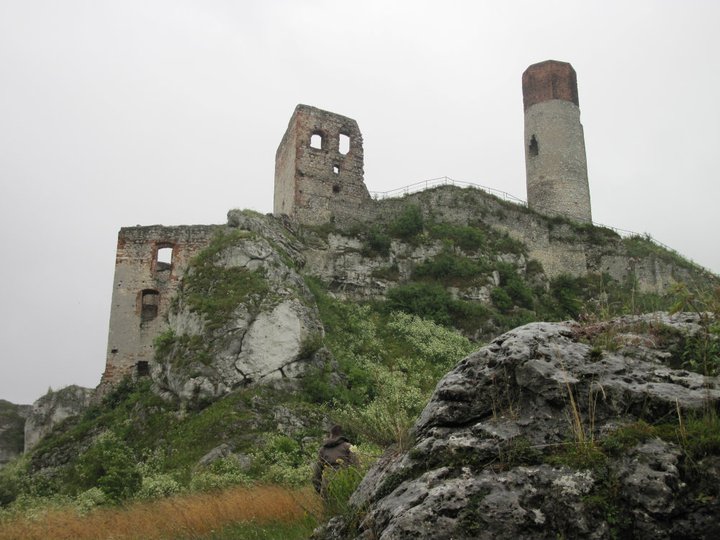
Driving back, I told Pavel and Olga the story of the cemetery the day before. Pavel was both happy for me, but also a bit upset. "As a Pole, I ashamed that students from Israel must come to Poland to clean up Polish graves. Our leaders often talk about Polish graves in the East that are mistreated by the Russians and how we must protect them, but here we have graves right in our faces and no one does anything." He went on, "I grew up in this city and learned about our history, but the only real contact I had with the Jewish history was a student trip to Auschwitz. I have learned more about the Jewish history of the city from you than I ever did in school."
I said it was a shame that all the focus of the area was centered on the monastery. Not that it wasn't important, but that it wasn't the only thing that happened there.
"Exactly!" he agreed. "You have Jewish history, Catholic history, political and cultural sites, not just Jasna Gora!"
"The irony," I said, "is that if the city would put some money into restoring and promoting some of the other sites it would bring more visitors. Instead all people know about is the Black Madonna."
They came back with me to dinner and we had a great time, discussing history, culture, the smashing of stereotypes and the complicated nature of family. Pavel mentioned that many Poles of his parents' age had been stuck between the failed system of Communism and of trying to chase the American dream of uber-capitalism, sometimes with pretty mixed results. It was a fascinating glimpse of how culture and cultural desires, such as acquisitiveness, is spread globally.
After lots of group pictures, I told Pavel, Olga and Yulia that we truly felt like they were a part of our family and that we looked forward to seeing them again soon.
Monday, August 08, 2011
Making Connections
[Although I've been back home for a few days, I will be continuing to post excerpts from my trip journal.]
Day 8- Cemetery Day!
We woke up early and Abbot Yid and I headed into town to try to find a better map of the area at the tourist center. This became its own adventure as the major boulevard of the city (which runs west-east from the monastery) was undergoing renovation work, and most of the north-south streets are either tiny or have a bad habit of suddenly becoming one-way streets or dead-ends. We finally got to the tourist center and got a better map. Coming out of the center, we ran smack-dab into a statue of a famous Polish poet, next to the high school named after him. This school was where Pavel had attended as a student, along with several of Mama Yid's distant relatives in the early 1900s. Looking at the school was bittersweet. On the one hand, it was nice to see that some traces of our family were still there in the town-- that some of the places they had touched and spent time had lasted. At the same time, I couldn't look at the building without thinking of what happened to those cousins:
One of them, Lolek, had done quite well in school. He graduated from high school with a certificate in Biology, then attended the University of Vilna in Lithuania as well as the Sorbonne in Paris, eventually graduating as a Surgeon. Lolek had easily been the most educated of anyone in his family, and was the first to enter the medical profession before Mama Yid many decades later. Had he stayed in France, or immigrated to America, who knows what might have become of him? Instead, tragically, he returned to Poland, to work in the Jewish Hospital in Cz. He lasted most of the war in one of the labor camps in the town making munitions, but was transferred to Buchenwald in early 1945 when the Nazis liquidated them ahead of the Soviet advance. He died just a few months before Soviet liberation, and his widow died in Los Angeles a few years ago.
So much promise, so much potential... a healer, a man who had devoted his life to helping people... and it hadn't mattered.
The big goal for the day was to find the Jewish cemetery and to see if we could find my great-great-great-grandfather Hirshel. GoogleMaps had made it sound like it was a straight shot once you were on the right road, but once we were driving out of town we realized it was a little more complicated than that. We drove until the road ended, in a mud slick by the outskirts of a small suburb. I checked the map. The problem was that the cemetery was in the middle of the forest, and the forest was growing between the road and the cemetery. I said it looked like we could just walk from there, but Abbot Yid wasn't interested in leaving the car in the middle of nowhere. So we got back in and tried again, this time sticking to the paved road. We took that road as far as we could until it dead-ended by an aluminum shop next to the river. According to the map the cemetery was on the other side.
Abbot Yid and I got out and chatted up a worker who had come out from the shop to see what we were up to. He looked like Wilford Brimley in overalls and a trucker hat. Using my extensive Polish skills plus the fine art of pantomime, I asked if we were close to the Jewish cemetery. He nodded, and proceeded to give me a two-minute animated speech in Polish. (Since I couldn't understand a thing I just watched him for body language.) We established that the cemetery was walkable from there, and also asked if we could leave the car there. He nodded and waved cheerfully.
To cross the river, we had to duck under gigantic water pipes (Pavel later explained that these pipes took water from the river and heated it to provide steam to the apartments in the city) and cross a railroad trestle. Abbot Yid remarked that only I would consider something like this a vacation.
We came to a clearing and saw a young Polish man walking from the left with a wheelbarrow with some wood stacked in it. I said Dzien dobry but he ignored me and just kept walking away, whistling to himself. We followed the way he had come and after a minute the trees gave way into another clearing, this time with a stone wall. We had found the cemetery! There was a small bus by the gate and I said Dzien dobry to the driver, who responded, "Hi!" He said he was there with an Israeli tour group that was there cleaning up the cemetery. I said we were looking for a grave. A number of years ago I had the good fortune to find part of the cemetery data online. It had been recorded by a researcher from Israel named Binyamin. He had the grave number and even a picture of Tzvi Hirsch's grave. I had been amazed and excited-- though this diminished slightly after I showed the picture to a friend and he pointed out that I had been holding it sideways the whole time and that the tombstone was on its side.
I had printed out a picture of the tombstone along with a map of the cemetery. I figured since we had the number of the stone and we knew what it looked like, it couldn't be all that hard. The driver pointed us in the approximate area where it might be, and went back to his bus. "Good luck," he said doubtfully.
As soon as he left us, I realized what he had meant. I had been in cemeteries in New York and they were challenging to walk through, but it was nothing like this. The forest had literally taken over the grounds. In places the trees were so dense you could barely see the sky. Still, I started hunting. I knew we were looking for a distinctive grave that had a round top but pointy side-corners, with a three-petaled flower on the side. And we had the grave number, that would help, right?

As we started looking, though, I started feeling a small pit in my stomach. There were no numbers on any of the stones. Only about a third were left standing. The others were jutting out at impossible angles from the ground, if they weren't lying face down and being grown over by weeds and grass. It looked like a hurricane had whipped through the place. There weren't even any paths. You could only get from one place to another by walking on the toppled stones. Every step I took, I was either stepping on someone's tombstone or their grave itself. It wasn't creepy as much as sad-- that this was all that was left.

Mama Yid's family were Kohanim, so I tried to look for Kohan hands extended in Vulcan-salute. But even then, I realized there was no way this was going to work. There were just too many graves, and too much forest. The pointy-cornered stone was not much help-- the style had been a popular choice, as had the three-petaled flower. We found some Kohanim, but none were inside the distinctive shape-- curved but with corners, almost like a policeman's badge-- that was on Hirshel's stone.
"I didn't realize it would be so hard," I said. I felt embarrassed. We had come so far to do this, and I hadn't had any sort of plan for finding the grave! I just thought it would happen. It had been stupid of me. "You'd need a miracle to find him here."

Mama Yid said she was going to ask the students for help. I was resistant, at first. It sounded like some of them were speaking Polish. Maybe the Israelis were working with local Poles? But in any case, it was good they were cleaning up the place, but that didn't mean they could help me find a grave. And if the Polish kids couldn't even read Hebrew, how could they even know what was there? It was hopeless. Part of this was also that I felt embarrassed that we couldn't find it ourselves and that I hadn't thought about how hard it might be. I was also a little nervous about talking to the Israelis. What if they didn't want to help?
Still, Mama Yid went and asked. We went up to a student and said hello. They weren't super confident in English so they went and got their teacher, Dina. She was in her early 50s and was direct and brash in a way that made her both slightly intimidating as well as immediately likable. She said they were from a high school in Jerusalem and had been coming to Poland to clean up cemeteries and to archive the data. My ears perked up.
I told her we were looking for a grave that had been catalogued by Binyamin years earlier. She sighed. "He had no system. You'll never find it that way. No chance. But, if you're lucky, we might have already documented it. Let me get my laptop."
As she fired it up, Abbot Yid said this was an incredible coincidence. Dina shot back immediately, "I don't believe in coincidences." As we made some small talk I mentioned my involvement with different genealogy organizations focusing on the Cz area.
Dina nodded. "Yeah, I have some problems with them. Then again, they have some problems with me. They charge people to look at cemetery data, and I think that's wrong. How it a 90-year-old lady looking for her family's tombstones supposed to pay that? So I do the same work and give it away free, and they don't like that very much." She also had some harsh words for the landsmanschaft organizations. "I've asked them for donations-- this whole project is all run on donations. The kids raise money in Israel to get here. This is their break before they go into the army, this is what they want to do. And so when someone tells me they'll give me 50,000 dollars, and then I call them ten times and never hear from them again, yeah, it's frustrating. I'd rather they give $100 and follow through on it." I made a mental note to send her a check when all this was over.
Dina asked me to repeat the name and found a match. "I've got him." She read off a plot and grave number. "He's in the Kohen section."
We followed her back to where we started, but this time went much further left from the main path. As we walked I stayed close to her with my parents following behind. She told me more about Binyamin and his methods. "He just started from the front and numbered every stone he saw. There was no organization. Before he died he gave me his blessing to continue his work, but this time in a systematic way, so future generations could come back and find them again."
Dina started walking into the tall grass. She hunted for a while and then came back. "There's no way we're getting in there. It's just too dense. But that also makes me think it's not the right spot. If I have him recorded on my computer then it has to be an area that we catalogued a few years ago." She and I retraced our steps a little and then tried branching off again. I felt my whole body clench. The thought that after all this we still might not find him was too much to think about. We had to see him. I had to see him.
Dina stopped by a stone. She and I were far ahead of my parents now. "What number did you have on that picture?"
"702."
"Well I have 703 here."
I perked up. "So it should be nearby, right?"
As always, she wouldn't give an inch. "Maybe. With Binyamin, who knows?"
We searched near 703-- there was one grave to the right and another to the left, but both were too small to be Hirshel's. I again began to wonder if we would ever find the grave. I tried to stay positive without getting my hopes up.
We had come from the left, so I decided to take another look to the right. The trees were very dense there, so low I had to crouch. The ground was covered in brambles and thorns. On my right there was grass taller than me. I kept trudging. Out of the corner of my eye I saw a shape-- a stone lying on its side. With a corner. The stone was leaning against a tree, just like in my picture.

Somehow, I knew it-- I knew that this was Hirshel. Waiting for us.
"I think I found it!" I ran over, ducking under trees, hopping over roots. I could only see the back of the stone. I was totally focused on getting to the other side. Nothing else mattered now-- not the trees, not the mosquitoes, not the cloudy sky above us.
I came around the side of the stone and scanned it: the left corner with the small three-petaled flower we had seen on so many others; the angle of the stone against the tree; the symbol of the Kohanim with the fingers arranged into a V-- but unlike all the others, placed into a spiky sideways oval, like a policeman's badge.
Despite some lessons with a tutor, my Hebrew was still extremely basic, but I could sight-read enough to confirm the inscription: "Tzvi Hirsh ben Meir Hakohen." My ancestor.
"I found him!" They all came running. Dina read off the tombstone and confirmed it. We had him. I got to work scraping off the moss with a wireless card we had gotten from the airport. Dina had said I should have the honor of the mitzvah.
It took about thirty minutes. My parents made small talk with Dina but I stayed totally focused. I scraped and scraped and when the card couldn't do any more, I used my hand, rubbing the sandstone until my fingers were raw As a finishing touch, Dina gave me some chalk to rub on the inscription, making the iconography and lettering pop out.

I stood there with the stone, speechless. Dina said she had to get back to her students but that they would be there if I wanted to say Kaddish. I nodded and said we would meet them back at the gate.
Abbot Yid asked me how I felt and I honestly there were no words. I had gone from such highs to lows and then back again that I was totally overwhelmed. There had been times that I thought it was hopeless and impossible, that I would never get to Poland, never make it to Czestochowa, never cajole my parents to coming to the cemetery, never find the stone. And yet, now, amazingly, we were here, with Hirshel. Exactly where we needed to be. It was seemed so hard, and yet now it was incredibly simple. I ran my fingers along the edges, feeling the chisel marks on the edge.
Hirshel was the only one from my mother's family with a grave. The only physical proof that her family had lived on this soil, in this place, for over one hundred and fifty years. He couldn't bring any of them back, of course. Not the ancestors who died long before the war or the relatives who had been murdered during it. But he could testify to their history. They had existed. That had been there. They had lived, right there. A legacy people had tried so hard to erase from the earth, so fragmented and limited, but here he was, right in front of me. My roots, brought to life.
I wanted to say Kaddish for him right there, as a personal link between us. But the words wouldn't come. I leafed through the bentscher I had brought from home but it wasn't in there. I stood there and tried over and over, "Yitbarach v'yishtabach...", but couldn't continue. I was ashamed at my ignorance. We had come so far and achieved so much, but this simple act of saying Kaddish for my ancestor at his grave was something I didn't have the tools to do. I wanted so much to honor my ancestors and their heritage, was respected (if only begrudgingly) by the rest of the family for being "so Jewish" but was still lacking basic Jewish literacy. What would Hirshel think of me, a descendant so ignorant he couldn't even say Kaddish for him? For the first time, I felt like crying. Not for Hirshel, but for myself.
My parents tried to make me feel better, pointing out that it would still be respectful to say Kaddish at the gates. I nodded. Before we left, I said the only thing I could: the Shehecheyanu: "Baruch Atah Adonai Eloheinu Melech Ha Olam, Shehechayanu, V'Kiyimanu, V'Higianu Lazman Hazeh." Blessed are You Adonai our God, King of the Universe, who has granted us life, sustained us and enabled us to reach this moment.
We walked back to the gate. The kids were gone, back working with the Polish men, who were collecting the chopped trees to take back to their homes for firewood. Yet when Dina called them back, they all appeared out fo the forest, like mythical creatures conjured up; Jews sprouting from the stones and trees to make a minyan, to do one more mitzvah, to try to make things a little better in the world.
Dina gave me a yarzeit candle. I lit it while she opened her prayer book and her kids made a wide circle. She handed me the book. "I can't read it," I whispered, too embarrassed to look her students in the eyes. "I'll lead and you follow," she said, without a trace of judgment.
That was exactly what we did, line by line, in the minyan of young Israelis, my middle-aged American parents, and one old Catholic Pole. Though I had wanted so much to say it alone, it also felt right to do it this way. In a minyan, as part of a community. The way Kaddish is supposed to be said.
We finished and I was so choked up I could barely speak. My embarrassment of my lack of Hebrew, my apprehension of being judged, all of it was gone. All that had mattered in that moment was the idea of family, of doing the decent and kind thing. It was incredibly powerful.
"Thank you," I said, wishing desperately I knew how to say the words in Hebrew. The kids nodded, as if it had been nothing and went back to work, doing on last mitzvah for those who could never say thank you.
We walked back with the students, some of whom were making a film for their class. Dina said they'd like to talk with us on camera. She remarked, "Just yesterday they were asking if anyone really cares about this stuff, if it really matters to anyone. And I told them, every trip, there's always someone who shows up looking for someone. They didn't believe me, but now it happened to them."
While the kids were setting up their shot, Dina explained their itinerary. "This is our last day here. Tomorrow we head to Lodz for Shabbat." I felt goosebumps popping all over my neck. Earlier that morning, when it had looked like it might rain, we had talked about going shopping that day and saving the cemetery for tomorrow. If we hadn't been there that day, they would have been gone, and I was sure now that we would never have found the grave.
We spoke on camera a little: I told them, "My mother's grandfather was from Czestochowa and his grandfather and namesake is buried here. What you have done for us-- what you're doing here-- is incredible." Before we left, Dina mentioned that were just five days away from Hirshel's yarzeit. One hundred and thirty-four years and we happened to come right before the anniversary of his death. We weren't the kind of epople who believed in fate of coincidence, but as Dina said, "Sometimes the separation between their world and ours is not so big."
As we left, we told Dina they had friends in San Francisco and that we would try to do what we could to help them continue their work. We couldn't explain what had happened, exactly. It wasn't logical. But someone or something had wanted us to find Hirshel's grave that day, and it happened.
The rest of the afternoon was relatively uneventful. One thing we did was find the monument at the Umschagplatz-- the site where the city's Jews had been deported to Treblinka. We drove until we found a spot near the end of town by the river and train tracks. The monument had been designed by a survivor from the city and paid for by the global Landsmanschaft. It consisted of a massive brick wall, with a large star of David on one side and a set of train tracks on the other, both made of iron. A giant crack broke the wall in two, symbolizing the destruction and trauma of the Holocaust. The plaques below, in Polish, English, Hebrew and Yiddish, spoke of the deaths of the 40,000 Jews of the city and concluded with, "Their memory be honored!"
I thought it was interesting that the plaque spoke of singular, communal memory, and that it was not phrased as a request, but a command, or perhaps, a commandment? (It made me think of Fackenheim's '614th commandment'- "Do not give Hitler posthumous victories.") Before we left, I had Abbot Yid take a picture of me at the monument. I stood right in the gap, one hand on each side, bridging the divide, re-establishing the connection. Yes, the break had happened, and we could never go back. Things could never be like they had been before (isn't that always the way of history?), and in some ways, that was a good thing. But to use the break as a rationale to shun the past, to denigrate our history and our ancestors along with it, was a mistake. If enough people took the time and made the effort, like me, like Dina, and even like my parents, we could be a bridge, a conduit between the Old the New Worlds, between the past and future. That was what my work in genealogy, and really the whole trip, was about.
We were supposed to spend time with Pavel and his family that afternoon, but after an emotional day we were all feeling drained. We had Polish-style spaghetti and meat sauce for dinner and went to bed early, exhausted. We all felt like we had been in a movie or something. The day had been incredibly powerful. We had started that morning optimistic and naive, not realizing how daunting the task would be. Then, faced with the reality of what we were trying to do, we had needed a miracle, and somehow, incredibly, we had gotten one. What else could we say.
A million thank yous to Dina, her students, and their ongoing project to clean and catalogue Jewish cemeteries in Poland. The only thing I can think of to sum up is to say this: They are doing holy work, and anything anyone can do to help them is a profound mitzvah.
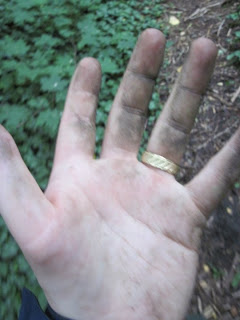
Day 8- Cemetery Day!
We woke up early and Abbot Yid and I headed into town to try to find a better map of the area at the tourist center. This became its own adventure as the major boulevard of the city (which runs west-east from the monastery) was undergoing renovation work, and most of the north-south streets are either tiny or have a bad habit of suddenly becoming one-way streets or dead-ends. We finally got to the tourist center and got a better map. Coming out of the center, we ran smack-dab into a statue of a famous Polish poet, next to the high school named after him. This school was where Pavel had attended as a student, along with several of Mama Yid's distant relatives in the early 1900s. Looking at the school was bittersweet. On the one hand, it was nice to see that some traces of our family were still there in the town-- that some of the places they had touched and spent time had lasted. At the same time, I couldn't look at the building without thinking of what happened to those cousins:
One of them, Lolek, had done quite well in school. He graduated from high school with a certificate in Biology, then attended the University of Vilna in Lithuania as well as the Sorbonne in Paris, eventually graduating as a Surgeon. Lolek had easily been the most educated of anyone in his family, and was the first to enter the medical profession before Mama Yid many decades later. Had he stayed in France, or immigrated to America, who knows what might have become of him? Instead, tragically, he returned to Poland, to work in the Jewish Hospital in Cz. He lasted most of the war in one of the labor camps in the town making munitions, but was transferred to Buchenwald in early 1945 when the Nazis liquidated them ahead of the Soviet advance. He died just a few months before Soviet liberation, and his widow died in Los Angeles a few years ago.
So much promise, so much potential... a healer, a man who had devoted his life to helping people... and it hadn't mattered.
The big goal for the day was to find the Jewish cemetery and to see if we could find my great-great-great-grandfather Hirshel. GoogleMaps had made it sound like it was a straight shot once you were on the right road, but once we were driving out of town we realized it was a little more complicated than that. We drove until the road ended, in a mud slick by the outskirts of a small suburb. I checked the map. The problem was that the cemetery was in the middle of the forest, and the forest was growing between the road and the cemetery. I said it looked like we could just walk from there, but Abbot Yid wasn't interested in leaving the car in the middle of nowhere. So we got back in and tried again, this time sticking to the paved road. We took that road as far as we could until it dead-ended by an aluminum shop next to the river. According to the map the cemetery was on the other side.
Abbot Yid and I got out and chatted up a worker who had come out from the shop to see what we were up to. He looked like Wilford Brimley in overalls and a trucker hat. Using my extensive Polish skills plus the fine art of pantomime, I asked if we were close to the Jewish cemetery. He nodded, and proceeded to give me a two-minute animated speech in Polish. (Since I couldn't understand a thing I just watched him for body language.) We established that the cemetery was walkable from there, and also asked if we could leave the car there. He nodded and waved cheerfully.
To cross the river, we had to duck under gigantic water pipes (Pavel later explained that these pipes took water from the river and heated it to provide steam to the apartments in the city) and cross a railroad trestle. Abbot Yid remarked that only I would consider something like this a vacation.
We came to a clearing and saw a young Polish man walking from the left with a wheelbarrow with some wood stacked in it. I said Dzien dobry but he ignored me and just kept walking away, whistling to himself. We followed the way he had come and after a minute the trees gave way into another clearing, this time with a stone wall. We had found the cemetery! There was a small bus by the gate and I said Dzien dobry to the driver, who responded, "Hi!" He said he was there with an Israeli tour group that was there cleaning up the cemetery. I said we were looking for a grave. A number of years ago I had the good fortune to find part of the cemetery data online. It had been recorded by a researcher from Israel named Binyamin. He had the grave number and even a picture of Tzvi Hirsch's grave. I had been amazed and excited-- though this diminished slightly after I showed the picture to a friend and he pointed out that I had been holding it sideways the whole time and that the tombstone was on its side.
I had printed out a picture of the tombstone along with a map of the cemetery. I figured since we had the number of the stone and we knew what it looked like, it couldn't be all that hard. The driver pointed us in the approximate area where it might be, and went back to his bus. "Good luck," he said doubtfully.
As soon as he left us, I realized what he had meant. I had been in cemeteries in New York and they were challenging to walk through, but it was nothing like this. The forest had literally taken over the grounds. In places the trees were so dense you could barely see the sky. Still, I started hunting. I knew we were looking for a distinctive grave that had a round top but pointy side-corners, with a three-petaled flower on the side. And we had the grave number, that would help, right?

As we started looking, though, I started feeling a small pit in my stomach. There were no numbers on any of the stones. Only about a third were left standing. The others were jutting out at impossible angles from the ground, if they weren't lying face down and being grown over by weeds and grass. It looked like a hurricane had whipped through the place. There weren't even any paths. You could only get from one place to another by walking on the toppled stones. Every step I took, I was either stepping on someone's tombstone or their grave itself. It wasn't creepy as much as sad-- that this was all that was left.

Mama Yid's family were Kohanim, so I tried to look for Kohan hands extended in Vulcan-salute. But even then, I realized there was no way this was going to work. There were just too many graves, and too much forest. The pointy-cornered stone was not much help-- the style had been a popular choice, as had the three-petaled flower. We found some Kohanim, but none were inside the distinctive shape-- curved but with corners, almost like a policeman's badge-- that was on Hirshel's stone.
"I didn't realize it would be so hard," I said. I felt embarrassed. We had come so far to do this, and I hadn't had any sort of plan for finding the grave! I just thought it would happen. It had been stupid of me. "You'd need a miracle to find him here."

Mama Yid said she was going to ask the students for help. I was resistant, at first. It sounded like some of them were speaking Polish. Maybe the Israelis were working with local Poles? But in any case, it was good they were cleaning up the place, but that didn't mean they could help me find a grave. And if the Polish kids couldn't even read Hebrew, how could they even know what was there? It was hopeless. Part of this was also that I felt embarrassed that we couldn't find it ourselves and that I hadn't thought about how hard it might be. I was also a little nervous about talking to the Israelis. What if they didn't want to help?
Still, Mama Yid went and asked. We went up to a student and said hello. They weren't super confident in English so they went and got their teacher, Dina. She was in her early 50s and was direct and brash in a way that made her both slightly intimidating as well as immediately likable. She said they were from a high school in Jerusalem and had been coming to Poland to clean up cemeteries and to archive the data. My ears perked up.
I told her we were looking for a grave that had been catalogued by Binyamin years earlier. She sighed. "He had no system. You'll never find it that way. No chance. But, if you're lucky, we might have already documented it. Let me get my laptop."
As she fired it up, Abbot Yid said this was an incredible coincidence. Dina shot back immediately, "I don't believe in coincidences." As we made some small talk I mentioned my involvement with different genealogy organizations focusing on the Cz area.
Dina nodded. "Yeah, I have some problems with them. Then again, they have some problems with me. They charge people to look at cemetery data, and I think that's wrong. How it a 90-year-old lady looking for her family's tombstones supposed to pay that? So I do the same work and give it away free, and they don't like that very much." She also had some harsh words for the landsmanschaft organizations. "I've asked them for donations-- this whole project is all run on donations. The kids raise money in Israel to get here. This is their break before they go into the army, this is what they want to do. And so when someone tells me they'll give me 50,000 dollars, and then I call them ten times and never hear from them again, yeah, it's frustrating. I'd rather they give $100 and follow through on it." I made a mental note to send her a check when all this was over.
Dina asked me to repeat the name and found a match. "I've got him." She read off a plot and grave number. "He's in the Kohen section."
We followed her back to where we started, but this time went much further left from the main path. As we walked I stayed close to her with my parents following behind. She told me more about Binyamin and his methods. "He just started from the front and numbered every stone he saw. There was no organization. Before he died he gave me his blessing to continue his work, but this time in a systematic way, so future generations could come back and find them again."
Dina started walking into the tall grass. She hunted for a while and then came back. "There's no way we're getting in there. It's just too dense. But that also makes me think it's not the right spot. If I have him recorded on my computer then it has to be an area that we catalogued a few years ago." She and I retraced our steps a little and then tried branching off again. I felt my whole body clench. The thought that after all this we still might not find him was too much to think about. We had to see him. I had to see him.
Dina stopped by a stone. She and I were far ahead of my parents now. "What number did you have on that picture?"
"702."
"Well I have 703 here."
I perked up. "So it should be nearby, right?"
As always, she wouldn't give an inch. "Maybe. With Binyamin, who knows?"
We searched near 703-- there was one grave to the right and another to the left, but both were too small to be Hirshel's. I again began to wonder if we would ever find the grave. I tried to stay positive without getting my hopes up.
We had come from the left, so I decided to take another look to the right. The trees were very dense there, so low I had to crouch. The ground was covered in brambles and thorns. On my right there was grass taller than me. I kept trudging. Out of the corner of my eye I saw a shape-- a stone lying on its side. With a corner. The stone was leaning against a tree, just like in my picture.

Somehow, I knew it-- I knew that this was Hirshel. Waiting for us.
"I think I found it!" I ran over, ducking under trees, hopping over roots. I could only see the back of the stone. I was totally focused on getting to the other side. Nothing else mattered now-- not the trees, not the mosquitoes, not the cloudy sky above us.
I came around the side of the stone and scanned it: the left corner with the small three-petaled flower we had seen on so many others; the angle of the stone against the tree; the symbol of the Kohanim with the fingers arranged into a V-- but unlike all the others, placed into a spiky sideways oval, like a policeman's badge.
Despite some lessons with a tutor, my Hebrew was still extremely basic, but I could sight-read enough to confirm the inscription: "Tzvi Hirsh ben Meir Hakohen." My ancestor.
"I found him!" They all came running. Dina read off the tombstone and confirmed it. We had him. I got to work scraping off the moss with a wireless card we had gotten from the airport. Dina had said I should have the honor of the mitzvah.
It took about thirty minutes. My parents made small talk with Dina but I stayed totally focused. I scraped and scraped and when the card couldn't do any more, I used my hand, rubbing the sandstone until my fingers were raw As a finishing touch, Dina gave me some chalk to rub on the inscription, making the iconography and lettering pop out.

I stood there with the stone, speechless. Dina said she had to get back to her students but that they would be there if I wanted to say Kaddish. I nodded and said we would meet them back at the gate.
Abbot Yid asked me how I felt and I honestly there were no words. I had gone from such highs to lows and then back again that I was totally overwhelmed. There had been times that I thought it was hopeless and impossible, that I would never get to Poland, never make it to Czestochowa, never cajole my parents to coming to the cemetery, never find the stone. And yet, now, amazingly, we were here, with Hirshel. Exactly where we needed to be. It was seemed so hard, and yet now it was incredibly simple. I ran my fingers along the edges, feeling the chisel marks on the edge.
Hirshel was the only one from my mother's family with a grave. The only physical proof that her family had lived on this soil, in this place, for over one hundred and fifty years. He couldn't bring any of them back, of course. Not the ancestors who died long before the war or the relatives who had been murdered during it. But he could testify to their history. They had existed. That had been there. They had lived, right there. A legacy people had tried so hard to erase from the earth, so fragmented and limited, but here he was, right in front of me. My roots, brought to life.
I wanted to say Kaddish for him right there, as a personal link between us. But the words wouldn't come. I leafed through the bentscher I had brought from home but it wasn't in there. I stood there and tried over and over, "Yitbarach v'yishtabach...", but couldn't continue. I was ashamed at my ignorance. We had come so far and achieved so much, but this simple act of saying Kaddish for my ancestor at his grave was something I didn't have the tools to do. I wanted so much to honor my ancestors and their heritage, was respected (if only begrudgingly) by the rest of the family for being "so Jewish" but was still lacking basic Jewish literacy. What would Hirshel think of me, a descendant so ignorant he couldn't even say Kaddish for him? For the first time, I felt like crying. Not for Hirshel, but for myself.
My parents tried to make me feel better, pointing out that it would still be respectful to say Kaddish at the gates. I nodded. Before we left, I said the only thing I could: the Shehecheyanu: "Baruch Atah Adonai Eloheinu Melech Ha Olam, Shehechayanu, V'Kiyimanu, V'Higianu Lazman Hazeh." Blessed are You Adonai our God, King of the Universe, who has granted us life, sustained us and enabled us to reach this moment.
We walked back to the gate. The kids were gone, back working with the Polish men, who were collecting the chopped trees to take back to their homes for firewood. Yet when Dina called them back, they all appeared out fo the forest, like mythical creatures conjured up; Jews sprouting from the stones and trees to make a minyan, to do one more mitzvah, to try to make things a little better in the world.
Dina gave me a yarzeit candle. I lit it while she opened her prayer book and her kids made a wide circle. She handed me the book. "I can't read it," I whispered, too embarrassed to look her students in the eyes. "I'll lead and you follow," she said, without a trace of judgment.
That was exactly what we did, line by line, in the minyan of young Israelis, my middle-aged American parents, and one old Catholic Pole. Though I had wanted so much to say it alone, it also felt right to do it this way. In a minyan, as part of a community. The way Kaddish is supposed to be said.
We finished and I was so choked up I could barely speak. My embarrassment of my lack of Hebrew, my apprehension of being judged, all of it was gone. All that had mattered in that moment was the idea of family, of doing the decent and kind thing. It was incredibly powerful.
"Thank you," I said, wishing desperately I knew how to say the words in Hebrew. The kids nodded, as if it had been nothing and went back to work, doing on last mitzvah for those who could never say thank you.
We walked back with the students, some of whom were making a film for their class. Dina said they'd like to talk with us on camera. She remarked, "Just yesterday they were asking if anyone really cares about this stuff, if it really matters to anyone. And I told them, every trip, there's always someone who shows up looking for someone. They didn't believe me, but now it happened to them."
While the kids were setting up their shot, Dina explained their itinerary. "This is our last day here. Tomorrow we head to Lodz for Shabbat." I felt goosebumps popping all over my neck. Earlier that morning, when it had looked like it might rain, we had talked about going shopping that day and saving the cemetery for tomorrow. If we hadn't been there that day, they would have been gone, and I was sure now that we would never have found the grave.
We spoke on camera a little: I told them, "My mother's grandfather was from Czestochowa and his grandfather and namesake is buried here. What you have done for us-- what you're doing here-- is incredible." Before we left, Dina mentioned that were just five days away from Hirshel's yarzeit. One hundred and thirty-four years and we happened to come right before the anniversary of his death. We weren't the kind of epople who believed in fate of coincidence, but as Dina said, "Sometimes the separation between their world and ours is not so big."
As we left, we told Dina they had friends in San Francisco and that we would try to do what we could to help them continue their work. We couldn't explain what had happened, exactly. It wasn't logical. But someone or something had wanted us to find Hirshel's grave that day, and it happened.
The rest of the afternoon was relatively uneventful. One thing we did was find the monument at the Umschagplatz-- the site where the city's Jews had been deported to Treblinka. We drove until we found a spot near the end of town by the river and train tracks. The monument had been designed by a survivor from the city and paid for by the global Landsmanschaft. It consisted of a massive brick wall, with a large star of David on one side and a set of train tracks on the other, both made of iron. A giant crack broke the wall in two, symbolizing the destruction and trauma of the Holocaust. The plaques below, in Polish, English, Hebrew and Yiddish, spoke of the deaths of the 40,000 Jews of the city and concluded with, "Their memory be honored!"
I thought it was interesting that the plaque spoke of singular, communal memory, and that it was not phrased as a request, but a command, or perhaps, a commandment? (It made me think of Fackenheim's '614th commandment'- "Do not give Hitler posthumous victories.") Before we left, I had Abbot Yid take a picture of me at the monument. I stood right in the gap, one hand on each side, bridging the divide, re-establishing the connection. Yes, the break had happened, and we could never go back. Things could never be like they had been before (isn't that always the way of history?), and in some ways, that was a good thing. But to use the break as a rationale to shun the past, to denigrate our history and our ancestors along with it, was a mistake. If enough people took the time and made the effort, like me, like Dina, and even like my parents, we could be a bridge, a conduit between the Old the New Worlds, between the past and future. That was what my work in genealogy, and really the whole trip, was about.
We were supposed to spend time with Pavel and his family that afternoon, but after an emotional day we were all feeling drained. We had Polish-style spaghetti and meat sauce for dinner and went to bed early, exhausted. We all felt like we had been in a movie or something. The day had been incredibly powerful. We had started that morning optimistic and naive, not realizing how daunting the task would be. Then, faced with the reality of what we were trying to do, we had needed a miracle, and somehow, incredibly, we had gotten one. What else could we say.
A million thank yous to Dina, her students, and their ongoing project to clean and catalogue Jewish cemeteries in Poland. The only thing I can think of to sum up is to say this: They are doing holy work, and anything anyone can do to help them is a profound mitzvah.
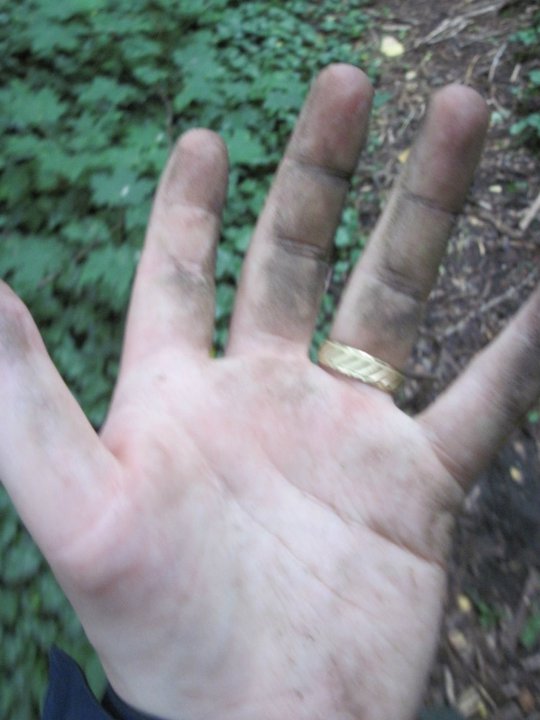
Friday, July 29, 2011
Face-to-Face
Day 7- Our first day in Cz, a city I've been curious about since age twelve. It felt amazing to finally be there. Our apartment was near the famous monastery so we spent part of the morning walking around and exploring it.

It was interesting but also very hot and crowded. The highlight had to have been going into one of the many museums on the monastery grounds (this one was devoted to the many kinds of musical instruments that had been played as part of religious ceremonies there over the last 600 years) and getting yelled at by a nun.
Yes, that's right. A nun came up to your humble Friar and began castigating him in Italian. Sensing a perhaps surprising lack of shame or contrition, she checked to see if I even spoke Italian, then testily got someone in her tour group to translate into English. "Your camera-- need be closed." I looked down. My camcorder? Which was turned off, had the lens cap on, and was turned backyards facing my chest? Just how badly did this woman think I wanted to document their 14th century French horns? I smiled and said it was already off, even showing them that the lens cap was covered, but the nun was uninterested in such minor details and continued to harangue me. Luckily, however, it turns out it is quite hard to yell at someone who doesn't speak your language and refuses to react to you. I smiled and nodded about 20 times in the course of a minute, totally unperturbed, until the nun grew bored with me and took off with her tour group. Hooray for cultural exchange!
I had a friend in town who I'll call Pavel. Pavel was from Cz and had attended the same high school as some of Mama Yid's distant relatives before WWI. Back in high school, many years ago, I had googled the name of the school in question and some student webpages had popped up for kids to practice their English. I had picked the one whose English was best and who said he liked history and asked him to help me learn more about the city. Pavel had been a wonderful sport and we had kept in contact ever since. He met us with his 5-year-old daughter Yulia and took Abbot Yid and I on a quick tour around town and to the mall to get some supplies. Cz is a small city by US (and even Polish) standards but this mall was gigantic, three stories and at least a few miles across. Everything there was very slick and modern, including a Polish version of Whole Foods (a sad must for those of us with food allergies) and of course McDonald's. Pavel said lots of Poles spend their time chasing the American dream, whether they can afford it or not.
A little later my parents and I met Pavel at his home for dinner with his family-- him, his daughter Yulia and their wife Olga. Olga was a teacher by trade and quit when their daughter was born but was now that she was about to start school had started looking for work again, with mixed results. Pavel worked in the communications department for a nearby city doing promotions and event planning. Their apartment building looked ancient, Soviet and utilitarian from the outside (lots of concrete and harsh corners, a style quite popular in town) but the inside was warm and homey, with lots of bright painted colors and attractive modern furniture. Though Olga's English was shaky (she understood much more than she could speak), we all had a lovely time. One highlight was me using an English fairy tale book to learn Polish vocabulary from Yulia and Olga and in turn teaching them the English words for the same objects, animals and colors. Another was getting a chance to discuss some Polish politics and history with real, average young people and get their thoughts.
I said I was very pleased to be in Poland and to get a chance to see how my ancestors lived and not just focus on how they died. Pavel and Olga said they were glad to see people like us were in America and that we had helped smash some stereotypes of theirs about Americans, particularly the idea that we were all rich and never had any problems. While it was clear our standard of living was light-years beyond theirs, we agreed that people were people and all people had problems. Toward the end of the evening, Olga commented (through Pavel) that I reminded her of a friend of theirs, a priest interestingly enough, who also has a beard as well as a "very kind heart." As we left, my parents said, without exaggeration, that the evening had been the highlight of the trip.

It was interesting but also very hot and crowded. The highlight had to have been going into one of the many museums on the monastery grounds (this one was devoted to the many kinds of musical instruments that had been played as part of religious ceremonies there over the last 600 years) and getting yelled at by a nun.
Yes, that's right. A nun came up to your humble Friar and began castigating him in Italian. Sensing a perhaps surprising lack of shame or contrition, she checked to see if I even spoke Italian, then testily got someone in her tour group to translate into English. "Your camera-- need be closed." I looked down. My camcorder? Which was turned off, had the lens cap on, and was turned backyards facing my chest? Just how badly did this woman think I wanted to document their 14th century French horns? I smiled and said it was already off, even showing them that the lens cap was covered, but the nun was uninterested in such minor details and continued to harangue me. Luckily, however, it turns out it is quite hard to yell at someone who doesn't speak your language and refuses to react to you. I smiled and nodded about 20 times in the course of a minute, totally unperturbed, until the nun grew bored with me and took off with her tour group. Hooray for cultural exchange!
 |
| Did I mention it's really, really Catholic here? |
I had a friend in town who I'll call Pavel. Pavel was from Cz and had attended the same high school as some of Mama Yid's distant relatives before WWI. Back in high school, many years ago, I had googled the name of the school in question and some student webpages had popped up for kids to practice their English. I had picked the one whose English was best and who said he liked history and asked him to help me learn more about the city. Pavel had been a wonderful sport and we had kept in contact ever since. He met us with his 5-year-old daughter Yulia and took Abbot Yid and I on a quick tour around town and to the mall to get some supplies. Cz is a small city by US (and even Polish) standards but this mall was gigantic, three stories and at least a few miles across. Everything there was very slick and modern, including a Polish version of Whole Foods (a sad must for those of us with food allergies) and of course McDonald's. Pavel said lots of Poles spend their time chasing the American dream, whether they can afford it or not.
A little later my parents and I met Pavel at his home for dinner with his family-- him, his daughter Yulia and their wife Olga. Olga was a teacher by trade and quit when their daughter was born but was now that she was about to start school had started looking for work again, with mixed results. Pavel worked in the communications department for a nearby city doing promotions and event planning. Their apartment building looked ancient, Soviet and utilitarian from the outside (lots of concrete and harsh corners, a style quite popular in town) but the inside was warm and homey, with lots of bright painted colors and attractive modern furniture. Though Olga's English was shaky (she understood much more than she could speak), we all had a lovely time. One highlight was me using an English fairy tale book to learn Polish vocabulary from Yulia and Olga and in turn teaching them the English words for the same objects, animals and colors. Another was getting a chance to discuss some Polish politics and history with real, average young people and get their thoughts.
I said I was very pleased to be in Poland and to get a chance to see how my ancestors lived and not just focus on how they died. Pavel and Olga said they were glad to see people like us were in America and that we had helped smash some stereotypes of theirs about Americans, particularly the idea that we were all rich and never had any problems. While it was clear our standard of living was light-years beyond theirs, we agreed that people were people and all people had problems. Toward the end of the evening, Olga commented (through Pavel) that I reminded her of a friend of theirs, a priest interestingly enough, who also has a beard as well as a "very kind heart." As we left, my parents said, without exaggeration, that the evening had been the highlight of the trip.
 |
| Though randomly seeing this in the middle of a traffic circle was also pretty awesome. (I was going to make a joke about how this must be St. Christopher, patron saint of drivers, only then I actually read the inscription and it turns out reality beat me to it.) |
Wednesday, July 20, 2011
On the Road
Day 6- Lame road trip
What a day. We traveled about 150 miles from Warsaw to Czestochowa and it took forever. Abbot Yid ordered a GPS with the car but it never got there, so I got to be the only navigator. Yay?
Getting out of Warsaw was a little tricky. We accidentally made a wrong turn and went across the Vistula river into Praga. That took a while to get out of. On the plus side, we didn't think we'd get a chance to see Praga, so, there's that.
Driving in Poland is challenging for a few reasons. There is relatively little signage except at intersections, and the bigger avenues can go on for quite a while until you find out what street you're on. For some strange reason, the intersecting street signs are often facing away from you when you approach them in a car, which means you can drive for several blocks until you finally figure out you're going the wrong way.
The same thing happened once we got onto the highway-- it turns out in the first town after Warsaw there are two highways, both going South but rapidly diverging into an upside-down V. Guess which one we took? After I figured that out, we had to get off the highway in a small town and figure out how to cut over via a smaller road-- which we initially went the wrong way on, as well. All of this was very stressful because I had given a rough guess of when we would get into town to our apartment rental guy and I was having trouble reaching him, and I was worried if we were too late he wouldn't be there.
Once we were finally on the right highway, the real fun began. Did you know Poland is undergoing major highway renovation? Which looks like it's going to take a freaking decade to finish? Causing large stretches of their highways to be condensed to a single lane? Interestingly enough, though the guidebooks caution you not to speed lest you be stopped by police (and note that "ignorance is no excuse"), we probably saw over 100 people speeding on the road (including gigantic semi-trucks) and not a single police officer. Abbot Yid was probably going 10-20 km over the speed limit, and almost every 5 minutes someone would be tailgating us trying to pass.
Ah yes, Polish drivers love to change lanes while speeding down their not-very-good highway (in some parts it was literally a dirt-and-gravel road) which they somehow think is the Autobahn. I have no idea where all these folks are going, but they've got things to do, apparently.
Things picked up after Piotrkow Trybunalski- different highway, better roads, 2 whole lanes, still crazy drivers, though. We finally got into town, and then we were lost some more, so I had to go into a Polish 7-11 for help. To the gangly Polish kid with the death metal hair and the passable English, many thanks.
Time to drive according to Google Maps: 3.5 hours.
Actual time from apartment to apartment: about 6 hours.
Lame, Google. Very lame.
What a day. We traveled about 150 miles from Warsaw to Czestochowa and it took forever. Abbot Yid ordered a GPS with the car but it never got there, so I got to be the only navigator. Yay?
Getting out of Warsaw was a little tricky. We accidentally made a wrong turn and went across the Vistula river into Praga. That took a while to get out of. On the plus side, we didn't think we'd get a chance to see Praga, so, there's that.
Driving in Poland is challenging for a few reasons. There is relatively little signage except at intersections, and the bigger avenues can go on for quite a while until you find out what street you're on. For some strange reason, the intersecting street signs are often facing away from you when you approach them in a car, which means you can drive for several blocks until you finally figure out you're going the wrong way.
The same thing happened once we got onto the highway-- it turns out in the first town after Warsaw there are two highways, both going South but rapidly diverging into an upside-down V. Guess which one we took? After I figured that out, we had to get off the highway in a small town and figure out how to cut over via a smaller road-- which we initially went the wrong way on, as well. All of this was very stressful because I had given a rough guess of when we would get into town to our apartment rental guy and I was having trouble reaching him, and I was worried if we were too late he wouldn't be there.
Once we were finally on the right highway, the real fun began. Did you know Poland is undergoing major highway renovation? Which looks like it's going to take a freaking decade to finish? Causing large stretches of their highways to be condensed to a single lane? Interestingly enough, though the guidebooks caution you not to speed lest you be stopped by police (and note that "ignorance is no excuse"), we probably saw over 100 people speeding on the road (including gigantic semi-trucks) and not a single police officer. Abbot Yid was probably going 10-20 km over the speed limit, and almost every 5 minutes someone would be tailgating us trying to pass.
Ah yes, Polish drivers love to change lanes while speeding down their not-very-good highway (in some parts it was literally a dirt-and-gravel road) which they somehow think is the Autobahn. I have no idea where all these folks are going, but they've got things to do, apparently.
Things picked up after Piotrkow Trybunalski- different highway, better roads, 2 whole lanes, still crazy drivers, though. We finally got into town, and then we were lost some more, so I had to go into a Polish 7-11 for help. To the gangly Polish kid with the death metal hair and the passable English, many thanks.
Time to drive according to Google Maps: 3.5 hours.
Actual time from apartment to apartment: about 6 hours.
Lame, Google. Very lame.
Wrapping up Warsaw
Day 5: Abbot Yid was on the mend, now it was Mama Yid's turn for Pilsudski's revenge. I decided, being the reasonably competent city dweller I am, that I could take on Warsaw and see the sights for myself. So I did.
First stop was I.B. Singer's house, which was back in Mirow. I decided to forgo the bus and walk, since I am a pretty fast walker and I'd been chafing to walk at my regular pace since we got here. I managed to get there in about 40 minutes from Old Town. All the old buildings around there are long gone, replaced by square and rectangular Soviet-style apartment houses and unfortunately there wasn't even an address plate for number 10- but I took a picture anyway, just to have.
I ate lunch in a park across the street and then tried to find I.L. Peretz street. It took a while but I finally found it- Perec, as it's written in Polish, is a tiny alley between the Westin Hotel and Deloitte headquarters, near a store that sold high-end telescopes.

From there I checked out Nozyk synagogue. In typical Polish style, the original classic building is connected with a pretty gray, square, utilitarian one that serves as the front entrance. Old and New, pretty and... not. It started to rain and so I ducked into the Judaica shop in the basement, where I got a couple of souvenirs.
After that I wandered around the neighborhood a little-- the problem with the old streets is a lot of them don't connect or dead-end randomly, and meander around, rather than going right through, to the large avenues. I got a little turned around (bonus- did you know that Warsaw has the first Erotic Museum in Poland? I do now.) Finally I made it to the last spot on my itinerary, Prozna street.
Prozna is the last standing block of the Warsaw ghetto, and the dilapidated brick buildings are totally dwarfed by the modern high-rises all around them. Adding to the eerie ghost town feel is the fact that the buildings are covered with giant blown-up sepia pictures of Warsaw Jews.


One side of the street, strangely enough, has a bunch of working businesses on the bottom floor-- cafes, shops, etc. At the end of the block, the last brick building had several satellite dishes coming out of apartments-- which I suppose means that one of them is occupied. I wondered how much of the place's history the residents know about and how much it affects their lives. What does the Warsaw ghetto mean to the people who live and work on Prozna street? To kids who grow up looking at giant pictures of ghosts outside their window? Is it traumatic? Or, even worse, do they become jaded and immune to it? How do the parents explain it to their children?
On my way back through the city to our flat I decided to go through the Saxon Gardens. They were very pretty and very European-looking. Lots of very manicured lawns and some really awesome statues. It's interesting that while the popular image of Poland is of being culturally located in Eastern Europe, we've also been learning about and seeing a lot of French and Italian influences, too. The Gardens reminded me quite a lot of the Champs Elysses. I keep having to re-adjust my brain to everything that I'm seeing and processing that all of this is Poland-- the crumbling pre-war buildings, the towering and harsh Soviet architecture, and the super-modern condos and skyscrapers made of glass. Its all Poland, and it signifies that its all very complicated.

In some ways, seeing the pretty stuff is harder than the sad stuff. Being in the Saxon Gardens was lovely, but also haunting. How could a place of such beauty also be the site of so much death and misery? I've realized while here that Poland has a "black-and-white" problem, and I don't just mean that people see it in a simplistic, good guys and bad guys way. When a lot of people think of Poland, I think their image is of black-and-white news reals from the Holocaust and WWII. Or it's Schindler's List.
But either way, it's never of Poland in color, never of it being a real country part of the 21st century. For them, that's all Poland is. That's an unfair view and I think eventually it will change, just like it presently is changing. However, at the same time, sitting in that beautiful park, thinking of my family, who walked and played there-- I couldn't help wondering how, and why, fate and men could be so cruel as to deny them the right to live.
Yes, Poland is beautiful. Which makes it all the more tragic that so many Polish Jews were not allowed to enjoy it. Why were so many Polish Jewish children never allowed to walk where I walked? That should have been their birthright, as Poles and human beings. While I'm happy to honor their memory by learning more about where they lived and the lives they had here, I can't enjoy it "with a full cup." They should have lived. They should still be here.
We should have more than a single remnant here. They should be here, enjoying it with me.
Truding back home I was pretty happy. I had spent a whole day by myself in a foreign country, totally self-sufficient, and everything turned out fine, thanks to good planning (food, water, map) and some willingness to follow my gut and explore a little. If I hadn't ducked into the synagogue shop I wouldn't have found those fun souvenirs and if I hadn't decided to go through Saxon gardens I wouldn't have found restrooms or some quiet green space.
After going back to the apartment Abbot Yid and I went out foraging. We grabbed some cash and other essentials at a small shop and then passed an Asian market I had forgotten to tell him about. Boy was he excited! We popped in and got him some gluten-free stuff.
For my fifth dinner in Poland I had the extremely traditional home-made Pad Thai. Go authenticity!
First stop was I.B. Singer's house, which was back in Mirow. I decided to forgo the bus and walk, since I am a pretty fast walker and I'd been chafing to walk at my regular pace since we got here. I managed to get there in about 40 minutes from Old Town. All the old buildings around there are long gone, replaced by square and rectangular Soviet-style apartment houses and unfortunately there wasn't even an address plate for number 10- but I took a picture anyway, just to have.
 |
| I.B. Singer's old street intersects with John Paul II Avenue. I can't make these things up. |
I ate lunch in a park across the street and then tried to find I.L. Peretz street. It took a while but I finally found it- Perec, as it's written in Polish, is a tiny alley between the Westin Hotel and Deloitte headquarters, near a store that sold high-end telescopes.

From there I checked out Nozyk synagogue. In typical Polish style, the original classic building is connected with a pretty gray, square, utilitarian one that serves as the front entrance. Old and New, pretty and... not. It started to rain and so I ducked into the Judaica shop in the basement, where I got a couple of souvenirs.
After that I wandered around the neighborhood a little-- the problem with the old streets is a lot of them don't connect or dead-end randomly, and meander around, rather than going right through, to the large avenues. I got a little turned around (bonus- did you know that Warsaw has the first Erotic Museum in Poland? I do now.) Finally I made it to the last spot on my itinerary, Prozna street.
Prozna is the last standing block of the Warsaw ghetto, and the dilapidated brick buildings are totally dwarfed by the modern high-rises all around them. Adding to the eerie ghost town feel is the fact that the buildings are covered with giant blown-up sepia pictures of Warsaw Jews.


One side of the street, strangely enough, has a bunch of working businesses on the bottom floor-- cafes, shops, etc. At the end of the block, the last brick building had several satellite dishes coming out of apartments-- which I suppose means that one of them is occupied. I wondered how much of the place's history the residents know about and how much it affects their lives. What does the Warsaw ghetto mean to the people who live and work on Prozna street? To kids who grow up looking at giant pictures of ghosts outside their window? Is it traumatic? Or, even worse, do they become jaded and immune to it? How do the parents explain it to their children?
On my way back through the city to our flat I decided to go through the Saxon Gardens. They were very pretty and very European-looking. Lots of very manicured lawns and some really awesome statues. It's interesting that while the popular image of Poland is of being culturally located in Eastern Europe, we've also been learning about and seeing a lot of French and Italian influences, too. The Gardens reminded me quite a lot of the Champs Elysses. I keep having to re-adjust my brain to everything that I'm seeing and processing that all of this is Poland-- the crumbling pre-war buildings, the towering and harsh Soviet architecture, and the super-modern condos and skyscrapers made of glass. Its all Poland, and it signifies that its all very complicated.

In some ways, seeing the pretty stuff is harder than the sad stuff. Being in the Saxon Gardens was lovely, but also haunting. How could a place of such beauty also be the site of so much death and misery? I've realized while here that Poland has a "black-and-white" problem, and I don't just mean that people see it in a simplistic, good guys and bad guys way. When a lot of people think of Poland, I think their image is of black-and-white news reals from the Holocaust and WWII. Or it's Schindler's List.
 |
| Behold, colors! |
Yes, Poland is beautiful. Which makes it all the more tragic that so many Polish Jews were not allowed to enjoy it. Why were so many Polish Jewish children never allowed to walk where I walked? That should have been their birthright, as Poles and human beings. While I'm happy to honor their memory by learning more about where they lived and the lives they had here, I can't enjoy it "with a full cup." They should have lived. They should still be here.
We should have more than a single remnant here. They should be here, enjoying it with me.
Truding back home I was pretty happy. I had spent a whole day by myself in a foreign country, totally self-sufficient, and everything turned out fine, thanks to good planning (food, water, map) and some willingness to follow my gut and explore a little. If I hadn't ducked into the synagogue shop I wouldn't have found those fun souvenirs and if I hadn't decided to go through Saxon gardens I wouldn't have found restrooms or some quiet green space.
After going back to the apartment Abbot Yid and I went out foraging. We grabbed some cash and other essentials at a small shop and then passed an Asian market I had forgotten to tell him about. Boy was he excited! We popped in and got him some gluten-free stuff.
For my fifth dinner in Poland I had the extremely traditional home-made Pad Thai. Go authenticity!
Monday, July 18, 2011
A long day and some reflection
Day 4: Mirow District. Mama Yid and I left Abbot Yid at home to recuperate and set out for another formerly Jewish district on the West side of town, but this time south of where we had been previously. I managed to get us some bus tickets (yay pantomime and a notepad!) and we got on a bus which took us across town. Our first stop was the last fragment of the Warsaw ghetto wall that's still preserved, which was pretty sobering in its size. I knew it was tall, but until you see its scale and realize this was a cage to keep people inside it's hard to wrap your head around. After that we walked down some side-streets to find the Ghetto Evacuation Monument. This is the spot that commemorates where the Ghetto fighters came out through the sewers (the monument says "canals," which I suppose does sound nicer) onto the Aryan side of the city to escape.

The area was fascinating; it's in a pretty grungy part of town with a lot of dilapidated buildings and abandoned factories. At the same time there's a huge urban renewal project going on and there's a ton of construction happening in the area, with lots of modern skyscrapers, high-rise condos, and corporate parks popping up everywhere. The contrast was a bit bizarre; sort of like if you remade Silicon valley next to Blarney castle. As another example of this contrast between old and new, the monument is directly in front of the entrance to a condominium. The monument is a little surreal, being covered with disembodied hands, but I think I still prefer its (relative) understated-ness to the over-the-top HEROES! theme of the Ghetto Fighters Monument at Zamenhof.
After that we were pretty hungry, so we wandered around until we found, of all things, a Vietnamese restaurant. We were looking for I.B. Singer's childhood home at Krochmalna street, so in his honor, I had grilled goose. It was quite hot, and once we had finished lunch Mama Yid said she actually thought she might be done for the day. I was a little disappointed that we had only managed to get to two out of the four spots on my itinerary for the day, but she had also been a really good sport (even if we hadn't left the house until 11:30). The tricky thing was that the bus route I had planned to get home didn't run near where we were, since I had been thinking we would have made it further west towards the City Center. So we walked back. Luckily it was starting to get somewhat cloudy so the sun wasn't quite as bad. On the way home Mama Yid talked about how proud she was that I seemed so street-smart and self-sufficient here, which she wouldn't have said about me a year ago. The compliment was nice, though it also made me realize how much I've grown in the last few years since still living with them. Walking added up to 5.7 km (3.5 miles).

After that we were pretty hungry, so we wandered around until we found, of all things, a Vietnamese restaurant. We were looking for I.B. Singer's childhood home at Krochmalna street, so in his honor, I had grilled goose. It was quite hot, and once we had finished lunch Mama Yid said she actually thought she might be done for the day. I was a little disappointed that we had only managed to get to two out of the four spots on my itinerary for the day, but she had also been a really good sport (even if we hadn't left the house until 11:30). The tricky thing was that the bus route I had planned to get home didn't run near where we were, since I had been thinking we would have made it further west towards the City Center. So we walked back. Luckily it was starting to get somewhat cloudy so the sun wasn't quite as bad. On the way home Mama Yid talked about how proud she was that I seemed so street-smart and self-sufficient here, which she wouldn't have said about me a year ago. The compliment was nice, though it also made me realize how much I've grown in the last few years since still living with them. Walking added up to 5.7 km (3.5 miles).
We finally got back to the house and ate dinner. Abbot Yid was up and about trying to make arrangements for Krakow and London. Mama Yid and I headed out again to go check out New Town. She still hasn't really had a chance to do much shopping so I left her there and went west to see the town battlements. The walls are very cool; the old moat has been filled in with a dirt-and-gravel path so you can walk in the moat as well as along the inner and outer walls. The Poles seem to be incredibly cavalier about the whole thing, though. To them the wall really just seems to be a place to hang out; like a park. I saw merchants selling paintings, surly teenagers playing guitar, couples holding hands on benches-- but while they were sitting on turrets and lounging on castle walls! In some ways, it kind of takes away from the effect of being in a "Castle"-esque environment, because the modern world is so emphatically blending with the old world.
Old and New Town, including the battlements, are interesting because they're almost entirely reconstructions, but reconstructions done as carefully and accurately as possible. It creates a slightly surreal effect where you're walking around thinking, "Wow, this is so old, this thing must have been here for centuries--" and then you remember that actually it's probably only 50 years old or so. It's a bizarre dissonance shift, which is sort of appropriate for the trip in general. It's a well-known cliche, but I'm definitely getting the feeling that Poland is a "land of contrasts"-- some people here are really nice and friendly, while some seem on the surly side. Poland seems to be committed to honoring the horrors that happened on its soil, but at the same time is highly motivated to be a modern country and move forward with its future.
Being here has made me re-think some of my previous assumptions and feelings about Poland's responsibility as guardian (or co-guardian) of Jewish history and memory. I've often been somewhat miffed by the fact that a lot of former Jewish sites which were destroyed during the war haven't been restored (for instance the Tlomackie synagogue which is now a car dealership) except for a token plaque here or there. It feels like there should be more respect and acknowledgment, in a real way so people can understand that the Jews of Poland weren't mythical or make-believe, but real, present, and in a lot of ways, omnipresent in Polish society, and certainly in the larger cities like Warsaw. I want Poland to make sincere efforts to include the Jewish experience within the larger history of their country. At the same time, after coming here, I realize that it would be impossible for every site to be reconstructed. There has been so much suffering here, so much death and misery, that there's no way you could rebuild or memorialize it all; you'd have no city left. Honestly, that's not a realistic-- or fair-- position to take in a real country full of real people, most of whom weren't even alive when the war happened. What I've seen suggests that Poland is trying to find a compromise between honoring its history while not becoming victims to it.
While there may be more things Poland can do to make sure contemporary Poles understand Jews and Jewish history, as far as memorializing the past, I feel like they're doing a pretty good job. I've walked past dozens of museums, plaques and monuments in the few days we've been here and it feels like the Polish people, or at least government, understands the need to pay respect to history, while still working towards the future. I can't fault them for that, especially when most Jewish communities and individuals' involvement and engagement with Poland seems to be fairly minimal. If Jews abroad want Poland to understand Jews better, they might need to step up and actually do something to make it happen.
Subscribe to:
Posts (Atom)